INDUSTRY.co.id - JAKARTA – Bank Jakarta affirms its commitment to take a strategic role in the development of the capital city by becoming a Financial Operating System that connects various economic and social elements of the city.
This step is expected to accelerate Jakarta's transformation into an inclusive, smart, and sustainable global city.
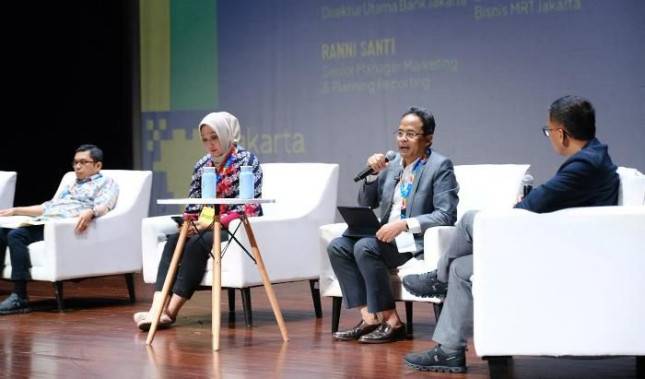
The commitment was conveyed by the President Director of Bank Jakarta, Agus H. Widodo, in the Urban Talks BUMD forum: City Catalyst, Development Accelerator which is part of the Jakarta Future Festival 2026 series at Taman Ismail Marzuki (TIM), Cikini, Central Jakarta, Friday (5/6).
According to Agus, Jakarta's biggest challenge today is no longer about physical development or the availability of technology, but rather how to create a strong connection between all stakeholders in the city.
"Jakarta has no shortage of buildings, roads, or technology. What still needs to be strengthened is the connectivity between citizens and services, UMKM with the market, investors with opportunities, and the government with the community," Agus said.
Agus explained, a number of Badan Usaha Milik Daerah (BUMD) have carried out strategic functions in urban life. MRT Jakarta acts as a hub for community mobility, TransJakarta is the backbone of public transportation, while PAM Jaya manages clean water services.
In the midst of this ecosystem, Bank Jakarta wants to become a financial sector liaison that integrates various community needs and economic opportunities in one interconnected system.
"Bank Jakarta wants to be a Financial Operating System for Jakarta, which connects various opportunities and needs of the community in an integrated financial ecosystem," he said. Bank Jakarta's Four Key Strategies to Support Development
To realize this vision, Bank Jakarta has prepared four main strategies that are the foundation of future development.
1. Expanding Financial Inclusion Bank Jakarta strives to ensure that all citizens can access formal financial services easily, safely, and digitally. This step is considered important because there are still some people who are not yet connected to the formal financial system.
2. Strengthen UMKM Support to the micro, small, and medium enterprise sector (UMKM) is not only focused on financing. Bank Jakarta also encourages market access, business digitization, and supply chain strengthening so that business actors are able to develop sustainably.
"UMKM not only needs loans, but also needs opportunities to develop and enter the larger economic ecosystem," Agus said.
3. Encourage Housing Inclusion Access to home ownership is a special concern of Bank Jakarta. According to Agus, the ever-increasing occupancy prices make it difficult for many young people to own their first home. Therefore, expanding access to housing financing is an important part of a more inclusive urban development strategy.
"Access to home financing must be part of the city's strategy because many young people have difficulty reaching house prices in Jakarta," he said.
4. Strengthening the Investment Climate The last strategy is to encourage investment enablement or strengthening the investment climate. Bank Jakarta wants to build investor confidence so that more capital enters Jakarta to support sustainable development.
Agus asserted that global city development cannot only rely on the Revenue Budget and Belanja Daerah (APBD), but requires investment support from various sectors.
On the occasion, Agus also highlighted the importance of the principle of no one left behind in digital transformation. He considered that technology should be a tool to expand opportunities for all levels of society, rather than widening social inequalities.
According to him, UMKM perpetrators, street vendors, and young families who are struggling to own their first home must be part of the ongoing benefits of digital transformation.
“Technology without inclusion will only create a widening gap. Therefore, digital transformation must benefit those who have been left behind," he said.
Agus assessed that the current role of BUMD has evolved from being a service provider to being a driver of the development ecosystem that is able to create wider economic and social impacts.
He asserted that Jakarta's success is not only measured by the magnificence of the infrastructure built, but also by the city's ability to open opportunities for its citizens to develop.
"The measure of Jakarta's success is not how high the building stands, but how many dreams can be realized by its citizens. If MRT connects thedotsof the city, then Bank Jakarta will connect the opportunitiesof life," concluded Agus.


