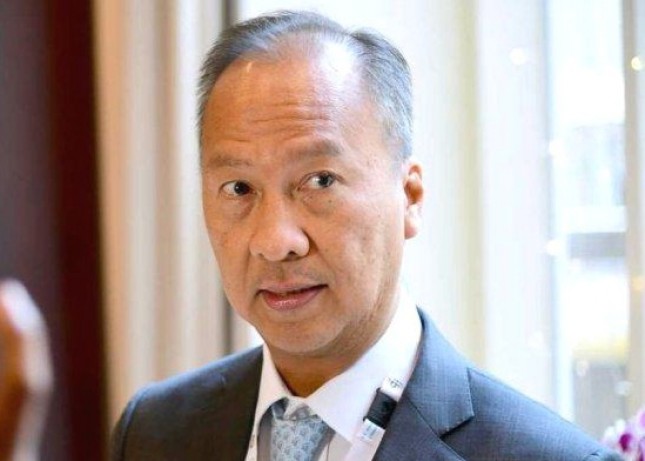

INDUSTRY.co.id - Jakarta – Minister of Industry (Menperin) Agus Gumiwang Kartasasmita prepared a major step to change the structure of the national manufacturing industry to be more export-oriented. He targets the export portion of Indonesian manufactured products to increase from about 20 percent to 30 percent, while the domestic market portion is adjusted from 80 percent to 70 percent.
The Minister of Industry said the strategy was carried out to strengthen the competitiveness of national industries amid global economic uncertainty, while maintaining sufficient supply for the domestic market.
According to Agus, the domestic market has been the main foundation of national industrial growth. However, to increase competitiveness and expand the market, Indonesian industries need to more aggressively penetrate international markets.
"The target is that the current composition of around 20 percent of exports and 80 percent of domestic can increase to 30 percent of exports and 70 percent of domestic, without reducing the industry's ability to meet the needs of the domestic market," Agus said in a Working Meeting with the VII DPR RI Commission in Jakarta, Monday (8/6).
The government's optimism is supported by the performance of the industrial sector which continues to show a positive trend. In the first quarter of 2026, Indonesia's economy grew 5.61 percent, while the processing industry sector recorded a growth of 5.04 percent and became the largest contributor to Produk Domestik Bruto (PDB).
The contribution of the processing industry to the national PDB reached 19.07 percent or worth Rp1,179.62 trillion.
Not only that, the industrial sector is also an investment magnet. Of the total national investment of Rp182.04 trillion in the first quarter of 2026, the processing industry sector absorbed investment of up to Rp36.49 trillion or about 20 percent of the total national investment.
In the international trade sector, exports of processed industrial products in theJanuary-April 2026 period reachedUS $75.57 billion or contributed 82.01 percent to total national exports.
Agus emphasized that strengthening exports does not mean sacrificing the needs of the domestic market. The government maintains a balance by strengthening national industrial protection instruments, controlling imports measurably, and providing fiscal and non-fiscal incentives for business actors.
"We want the Indonesian industry to be more competitive in the global market, but still make the domestic market a strong growth base," he said.
In addition to encouraging exports, the Ministry of Industry also proposed optimizing the use of Local Currency Settlement (LCS) to strengthen the resilience of national industries.
According to Agus, recommendations on the use of LCS have actually been submitted by the Ministry of Industry since 2023 as a step to reduce dependence on the AS dollar in international trade transactions.
"We have recommended the use of Local Currency Settlement since 2023. Expanding the use of local currencies in international trade can reduce the risk of exchange rate fluctuations while increasing transaction efficiency for national industry players," he said.
In the future, the Ministry of Industry is optimistic that the national industrial development target can be achieved through various priority programs. The government's focus includes strengthening downstream industry, developing industrial human resources, transforming towards green industry, developing (IKM) small and medium industries, and increasing productivity through technological innovation and utilization.