Indonesia has become one of the most attractive destinations for expats, digital nomads, and retirees seeking a lower cost of living without sacrificing quality of life. With a favorable exchange rate, affordable healthcare, and a booming digital infrastructure, the archipelago offers a compelling alternative to the rising expenses of American cities. This detailed comparison breaks down every major expense category to help you understand exactly how far your money goes in Indonesia versus the United States in 2026.
Why Compare Indonesia vs USA Cost of Living in 2026?
The global landscape for remote work and international relocation has shifted dramatically since the pandemic years. Indonesia's Second Home Visa, introduced in late 2022 and refined through 2024, now offers a streamlined path for long-term stays. Meanwhile, cost of living pressures in the United States—driven by persistent housing shortages, elevated interest rates, and healthcare premiums—have pushed many professionals to explore alternatives abroad.
Several factors make this comparison particularly relevant in 2026:
- Remote work normalization: Over 35% of US knowledge workers now operate remotely at least part-time, making geographic arbitrage a practical strategy rather than a pipe dream.
- Indonesia's digital nomad visa: The country actively courts location-independent professionals with dedicated visa categories and tax incentives.
- Currency dynamics: The Indonesian rupiah has maintained relative stability against the US dollar, with the exchange rate hovering around IDR 15,800–16,200 per USD through early 2026.
- Rising US costs: Average rent in major US metro areas has increased 18–25% since 2020, while grocery and healthcare costs continue to outpace wage growth.
For US, UK, and Australian professionals considering a move—or simply looking to optimize their budget—understanding the granular differences between these two markets is essential.
Housing: Rent and Property Costs
Housing represents the single largest expense for most people, and it's where the gap between Indonesia and the USA is most dramatic.
Renting in Jakarta vs Major US Cities
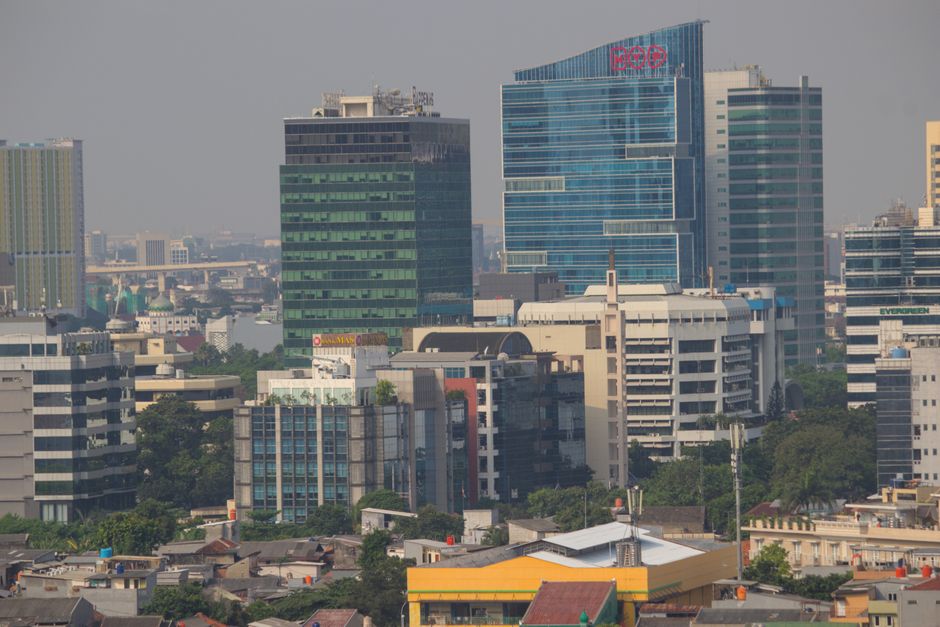
In central Jakarta, a modern one-bedroom apartment in a desirable neighborhood like Menteng, Kemang, or SCBD typically rents for IDR 8–15 million per month (approximately USD 500–950). A comparable unit in a mid-rise building with amenities such as a pool, gym, and 24-hour security might cost IDR 10–18 million (USD 625–1,125).
Compare that to US cities:
- New York City: One-bedroom in Manhattan averages USD 3,800–4,500/month
- San Francisco: One-bedroom averages USD 2,900–3,500/month
- Austin, Texas: One-bedroom averages USD 1,600–2,100/month
- Chicago: One-bedroom averages USD 1,800–2,400/month
Even in the most affordable US cities, rent is typically 2–4x higher than in Jakarta. For expats willing to live in Bali—particularly in popular areas like Canggu or Ubud—a comfortable villa with a private pool can be rented for IDR 10–25 million per month (USD 625–1,560), a fraction of what a comparable property would cost in Los Angeles or Miami.
Buying Property
Foreigners cannot own freehold land in Indonesia but can hold long-term leasehold agreements (up to 80 years with extensions) and own apartment units under certain conditions. Prices per square meter in central Jakarta range from IDR 25–50 million (USD 1,550–3,100), compared to USD 5,000–15,000+ per square meter in major US metro areas.
Food and Dining Costs
Indonesia offers one of the most affordable and diverse food scenes in the world. Whether you eat at local warungs (small family-owned eateries) or international restaurants, your food budget will be dramatically lower than in the USA.
Grocery Shopping
Monthly grocery costs for a single person in Jakarta typically run IDR 2–4 million (USD 125–250), compared to USD 400–700 in most US cities. Key price comparisons include:
- Rice (1 kg): IDR 12,000 (USD 0.75) vs USD 3.50–4.50 in the USA
- Chicken breast (1 kg): IDR 55,000 (USD 3.45) vs USD 10–14 in the USA
- Eggs (12): IDR 28,000 (USD 1.75) vs USD 4.50–6.00 in the USA
- Domestic beer (0.5L): IDR 35,000 (USD 2.20) vs USD 2.50–4.00
- Loaf of bread: IDR 15,000 (USD 0.95) vs USD 3.50–5.00
- Imported cheese (1 kg): IDR 150,000 (USD 9.40) vs USD 12–18
Eating Out
Local dining is where Indonesia truly shines for budget-conscious expats:
- Street food or warung meal: IDR 15,000–35,000 (USD 1.00–2.20)
- Mid-range restaurant, two-course meal: IDR 100,000–200,000 (USD 6.25–12.50)
- International restaurant meal: IDR 250,000–500,000 (USD 15.50–31.00)
- Coffee at a café: IDR 30,000–55,000 (USD 1.90–3.45)
In the USA, a basic fast-food meal now averages USD 10–14, a mid-range dinner for two runs USD 60–100, and specialty coffee typically costs USD 5–7.
Transportation Costs
Getting around Indonesia—particularly in Jakarta—has improved significantly with the expansion of the MRT, LRT, and app-based ride-hailing services.
Public Transportation
- Jakarta MRT single trip: IDR 3,000–14,000 (USD 0.19–0.88)
- TransJakarta bus: IDR 3,500 (USD 0.22)
- Monthly transit pass (Jakarta): IDR 200,000–350,000 (USD 12.50–22.00)
US public transit is considerably more expensive:
- New York City MetroCard monthly: USD 132
- Washington DC Metro monthly: USD 150–250
- San Francisco BART average commute: USD 100–180/month
Ride-Hailing and Personal Vehicles
Indonesia's ride-hailing ecosystem—anchored by Gojek and Grab—is extraordinarily affordable. A typical 10 km car ride in Jakarta costs IDR 25,000–50,000 (USD 1.55–3.10), while a motorcycle ride (ojol) for the same distance costs IDR 10,000–20,000 (USD 0.63–1.25). Uber/Lyft equivalents in the USA for a similar distance run USD 15–30.
For those who prefer to own a vehicle, gasoline in Indonesia is subsidized and costs approximately IDR 10,000 per liter (USD 2.38/gallon), compared to USD 3.50–4.50 per gallon in the USA.
Healthcare: Quality and Affordability
Healthcare is often the deciding factor for Americans considering international relocation. Indonesia offers a mixed system of public and private healthcare at dramatically lower costs than the US.
Insurance and Out-of-Pocket Costs
- Private health insurance (expat, comprehensive): USD 1,200–3,500/year in Indonesia vs USD 6,000–20,000/year in the USA (employer-sponsored individual plans average USD 8,435/year in 2025)
- Doctor visit (private clinic): IDR 200,000–500,000 (USD 12.50–31.00) vs USD 150–350 without insurance in the USA
- Dental cleaning: IDR 300,000–600,000 (USD 19–38) vs USD 100–250 in the USA
- Prescription medications: Generally 50–80% cheaper than US retail prices
International-standard hospitals in Jakarta—such as Siloam, Pondok Indah Hospital, and MRCCC—offer quality care with English-speaking staff. Many expats also carry medical evacuation insurance to Singapore or Australia for complex procedures, which adds approximately USD 200–500 per year.
Utilities and Internet
Monthly utility costs in Indonesia are substantially lower than in the USA:
- Electricity, water, garbage (85m² apartment): IDR 800,000–1,500,000/month (USD 50–94)
- High-speed internet (50–100 Mbps): IDR 300,000–500,000/month (USD 19–31)
- Mobile phone plan (unlimited data): IDR 100,000–250,000/month (USD 6.25–15.60)
In the USA, utilities for a similar apartment average USD 150–250/month, home internet runs USD 60–100/month, and mobile plans cost USD 50–90/month. The total communications and utilities bill in Indonesia can be 60–75% lower than in America.
Entertainment and Lifestyle
The cost of entertainment, fitness, and leisure activities in Indonesia is remarkably affordable:
- Gym membership (monthly): IDR 300,000–800,000 (USD 19–50) vs USD 40–150 in the USA
- Cinema ticket: IDR 40,000–75,000 (USD 2.50–4.70) vs USD 12–18 in the USA
- Spa/massage (1 hour): IDR 100,000–300,000 (USD 6.25–18.75) vs USD 80–150 in the USA
- Craft beer at a bar: IDR 50,000–100,000 (USD 3.10–6.25) vs USD 7–12 in the USA
- Coworking space (monthly): IDR 1.5–4 million (USD 94–250) vs USD 200–600 in the USA
For digital nomads, Bali's coworking scene is particularly well-developed, with spaces like Dojo Bali, Outpost, and B Work offering high-speed internet, community events, and tropical settings for a fraction of what a comparable workspace costs in San Francisco or New York.
Education Costs
For expats with families, education is a significant consideration. International schools in Jakarta and Bali offer curricula aligned with US, UK, and Australian standards:
- International school tuition (K-12): IDR 100–400 million/year (USD 6,250–25,000) vs USD 15,000–55,000/year for private schools in the USA
- University tuition (Indonesian public): IDR 5–25 million/year (USD 310–1,560) vs USD 10,000–40,000/year at US state universities
Top-tier international schools in Jakarta—such as the British School Jakarta, Jakarta Intercultural School (JIS), and the Australian International School—charge at the higher end of the range but still compare favorably to elite US private schools.
Tax Considerations for Expats
Understanding the tax implications of living in Indonesia is crucial for US, UK, and Australian citizens:
- Indonesian income tax: Progressive rates from 5% to 35%, with a tax-free threshold of IDR 54 million/year (USD 3,375). Non-residents face a flat 20% withholding rate.
- US citizens: You remain subject to US federal tax on worldwide income but can claim the Foreign Earned Income Exclusion (FEIE), which excludes up to USD 130,000 (2026 estimate) of foreign-earned income.
- Double taxation agreements: Indonesia has tax treaties with the US, UK, and Australia to prevent double taxation.
- Second Home Visa holders: May qualify for preferential tax treatment depending on the structure of their income.
Consulting a tax professional familiar with both jurisdictions is strongly recommended before making the move.
Monthly Budget Comparison: Jakarta vs US Cities
Here's a realistic side-by-side budget for a single professional living comfortably in Jakarta versus a mid-range US city:
Jakarta (Comfortable Expat Lifestyle):
- Rent (1BR, central): USD 750
- Groceries: USD 200
- Dining out: USD 200
- Transportation: USD 80
- Utilities & internet: USD 100
- Health insurance: USD 150
- Entertainment: USD 150
- Total: approximately USD 1,630/month
Mid-Range US City (Comparable Lifestyle):
- Rent (1BR, central): USD 1,800
- Groceries: USD 500
- Dining out: USD 400
- Transportation (car + insurance): USD 500
- Utilities & internet: USD 200
- Health insurance: USD 500
- Entertainment: USD 300
- Total: approximately USD 4,200/month
The difference—roughly USD 2,570 per month or USD 30,840 per year—represents the potential savings from geographic arbitrage. For a remote worker earning a US salary while living in Indonesia, this translates directly into increased savings, investment capital, or an improved quality of life.
Digital Nomad Indonesia: The Practical Reality
Indonesia's appeal to digital nomads extends beyond cost savings. The country offers:
- Robust internet infrastructure: Fiber-optic connections are widely available in major cities, with speeds of 50–300 Mbps common in urban areas and coworking spaces.
- Thriving community: Bali alone hosts an estimated 10,000+ digital nomads at any given time, with active communities on platforms like Nomad List, Facebook groups, and Discord servers.
- Time zone advantage: WIB (Jakarta time, GMT+7) allows overlap with both European and Asian business hours, while WITA (Bali time, GMT+8) works well for Australian clients.
- Cultural richness: From ancient temples to volcanic landscapes, Indonesia offers experiences that go far beyond what a typical US city can provide.
Challenges and Considerations
While the cost of living advantage is substantial, there are important considerations:
- Visa requirements: The Second Home Visa requires proof of IDR 2 billion (approximately USD 125,000) in savings or a guaranteed monthly income. Tourist visas are limited to 30–60 days.
- Language barrier: While English is widely spoken in business and expat circles, daily life often requires basic Indonesian (Bahasa Indonesia).
- Air quality: Jakarta's air pollution can be a concern, particularly during the dry season.
- Traffic: Jakarta's traffic congestion is legendary, though the expanding MRT system is gradually alleviating this.
- Bureaucracy: Indonesian bureaucracy can be slow and unpredictable, requiring patience for visa renewals, permits, and official processes.
- Natural disasters: Indonesia sits on the Pacific Ring of Fire, making earthquakes and volcanic activity a reality. Adequate insurance and preparedness are essential.
Frequently Asked Questions
Can I live comfortably in Indonesia on USD 2,000 per month?
Yes, USD 2,000 per month provides a comfortable lifestyle in most Indonesian cities, including Jakarta. You can afford a modern apartment in a good neighborhood, regular dining out, transportation, and entertainment. In Bali or smaller cities like Yogyakarta or Bandung, this budget allows an even more comfortable lifestyle. However, if you require international school education for children or prefer premium imported goods, budget USD 3,000–4,000 per month.
Is Indonesia safe for American expats?
Indonesia is generally safe for foreign residents. Petty crime like pickpocketing can occur in crowded areas, as in any major city, but violent crime against expats is rare. The country has a welcoming culture toward foreigners, and major cities have well-established expat communities. Standard precautions—avoiding displaying expensive items, using reputable transportation, and staying aware of your surroundings—apply as they would anywhere.
How does the Second Home Visa work for US citizens?
The Second Home Visa allows eligible foreigners to stay in Indonesia for up to 5 years (renewable for another 5). Applicants must demonstrate savings of at least IDR 2 billion (approximately USD 125,000) or provide evidence of substantial investment in Indonesia. The visa permits multiple entries and does not require a local sponsor. Processing times vary but typically take 4–8 weeks through an Indonesian embassy or consulate.
What are the best cities in Indonesia for digital nomads in 2026?
The top choices include:
- Bali (Canggu, Ubud): The most established digital nomad hub with excellent coworking spaces, a vibrant community, and a relaxed lifestyle. Best for creative professionals and startup founders.
- Jakarta: The business and financial capital, ideal for professionals working with Indonesian or Southeast Asian clients. Best infrastructure and connectivity.
- Yogyakarta: A university town with a growing tech scene, extremely affordable, and rich in culture. Ideal for budget-conscious nomads.
- Bandung: A cooler-climate city popular with Indonesian tech workers, offering lower costs than Jakarta with good internet connectivity.