In a bold strategic move, Alphabet has absorbed its AI robotics subsidiary Intrinsic directly into Google, merging it with DeepMind, Gemini AI models, and Google Cloud infrastructure. The consolidation signals Google's serious commitment to physical AI — artificial intelligence that controls real-world robots and manufacturing equipment.
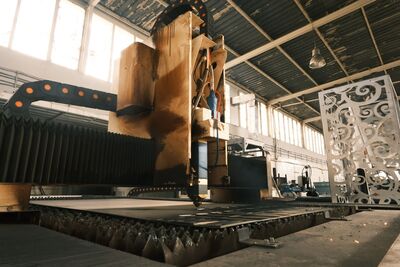
At Automate 2026, the largest edition in the event's 50-year history held in Chicago, Intrinsic unveiled an AI-powered modular robot workcell prototype designed for software-defined factories. The system allows manufacturers to reconfigure production lines through software rather than costly hardware overhauls.
What This Means for Manufacturing
The merger gives Intrinsic direct access to Google's most powerful AI models, cloud computing scale, and DeepMind's robotics research. The goal is ambitious: make AI-enabled robotics systems dramatically easier to build and deploy across industrial automation at scale.
"By bringing Intrinsic into Google, we can accelerate the development of physical AI systems that learn from their environment and adapt to new tasks without explicit programming," a Google spokesperson said during the Automate 2026 demonstration.
The Software-Defined Factory
Intrinsic's vision centers on the concept of a software-defined factory — a manufacturing environment where production lines can be reprogrammed and optimized through AI software updates rather than physical retooling. This approach promises to reduce downtime, lower costs, and enable mass customization at scale.
The modular workcell prototype demonstrated at Automate 2026 uses AI to coordinate multiple robot arms, adapt to different product designs in real-time, and optimize workflows based on production data. The system leverages Google's Gemini models for natural language task instructions, allowing factory workers to direct robots using plain English commands.
Industry Implications
This move positions Google as a direct competitor to established industrial automation players like ABB, FANUC, and Siemens. With DeepMind's expertise in reinforcement learning and Google Cloud's global infrastructure, the combined entity could fundamentally change how factories operate worldwide.
The physical AI market is projected to grow exponentially as manufacturers seek to address labor shortages, improve efficiency, and meet increasing demand for customized products. Google's entry with full AI stack integration could accelerate this transition significantly.