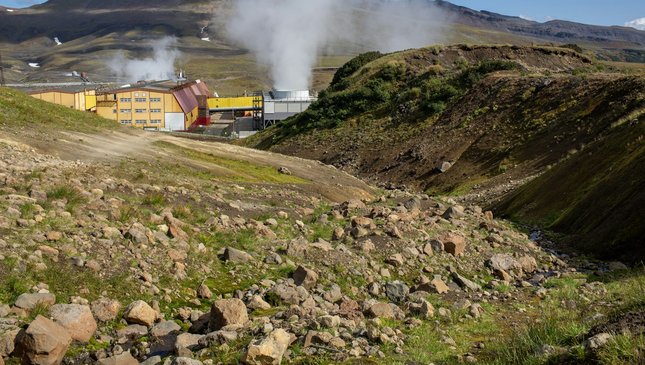
Indonesia sits on the Pacific Ring of Fire, a belt of volcanoes and tectonic activity that brings risks but also an important energy opportunity. Beneath many of its volcanic regions lies hot water and steam that can be used to generate electricity around the clock. Geothermal energy has made Indonesia one of the world's leading geothermal power producers, yet much of its potential remains untapped.
How geothermal power works
Geothermal plants drill wells deep into underground reservoirs where rock heated by magma warms trapped water. The steam or hot fluid brought to the surface drives turbines that generate electricity. After the heat has been used, the fluid is usually injected back underground to help sustain the reservoir.
Unlike solar and wind, which depend on weather and time of day, geothermal plants can run continuously. This makes them a source of baseload power, the steady supply that grids need to keep electricity flowing at all hours. For a country seeking to reduce its reliance on coal while keeping the lights on, this characteristic is especially valuable.
Why development takes time
If geothermal is so attractive, why is it not growing faster? The main obstacle is exploration risk. Developers cannot be certain how much usable heat a site holds until they drill, and exploration wells are expensive. A project can spend heavily before knowing whether it is commercially viable.
Geothermal resources are also often located in remote, mountainous areas, sometimes in or near protected forests. Building roads, transmission lines and plant facilities in such terrain adds cost and requires careful environmental management. Securing community support is equally important, as residents want assurance that their land, water and livelihoods will be respected.
Development timelines are long as well. From initial surveys to commercial operation, a geothermal project can take many years, which requires patient investors and stable policy.
Beyond electricity
Geothermal heat is not only useful for power plants. In several countries, it is used directly for drying agricultural products, heating greenhouses, processing food and supporting tourism. In Indonesia, direct use of geothermal heat for drying crops such as coffee, tea and cocoa is gaining attention as a way to add value for rural communities near geothermal fields.
What could accelerate growth
Industry observers commonly point to several measures that could speed up development: government-supported exploration drilling to reduce early-stage risk for investors, electricity tariffs that reflect the true cost and value of reliable clean power, faster and clearer permitting, and stronger involvement of local communities from the start.
Technology is also evolving. Improved drilling techniques, better reservoir modelling and the use of lower-temperature resources could expand the number of viable sites.
A strategic resource
As Indonesia works toward its energy transition goals, geothermal energy offers something few other renewable sources can: clean electricity that does not depend on the weather. For industries that need reliable power and want to lower their emissions, the heat beneath the archipelago's volcanoes may become an increasingly important part of the answer.


