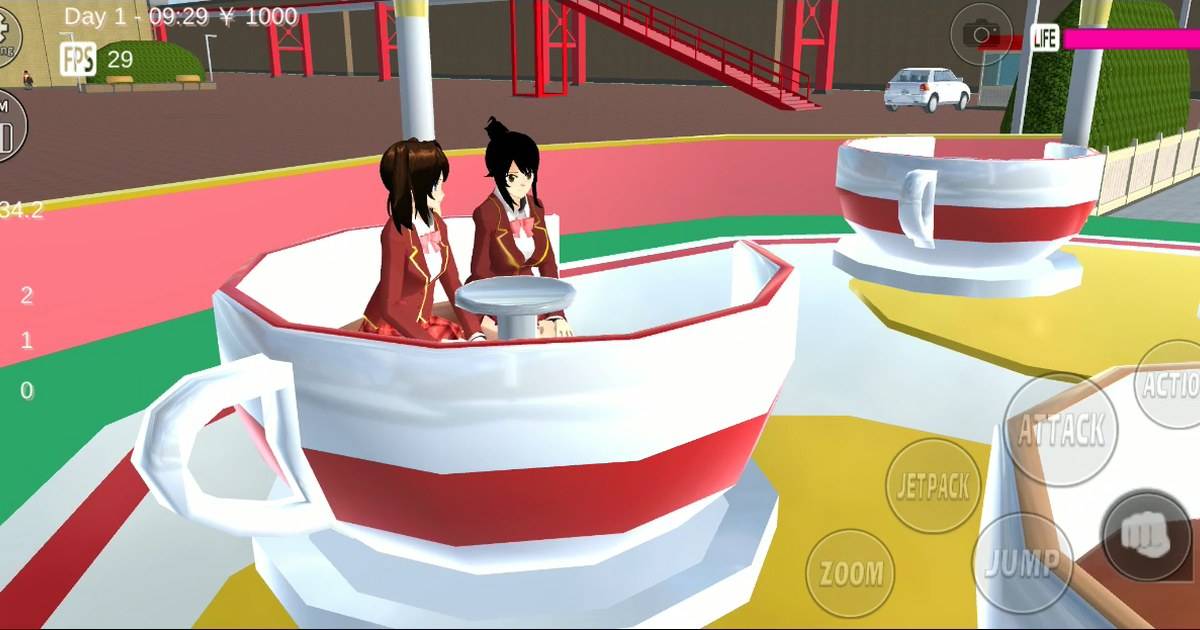
For a game with cars, jetpacks and dramatic battles, Sakura School Simulator has a surprisingly gentle premise. Garusoft explicitly presents making friends and enjoying school life as one of its two main ways to play. Yet many guides rush straight to shortcuts or combat, leaving ordinary conversations and social scenes as background noise.
This seven-day plan takes the quieter route. It is an original self-imposed challenge, not an official quest, relationship meter formula or promise that a certain NPC will respond in a particular way. The aim is to give players a reason to explore, dress for the occasion and create a small story without relying on cheats.
Highlights
- Garusoft describes friendship and romance as part of the school-life experience.
- The seven-day schedule below is a creative challenge, not a hidden reward sequence.
- Use ordinary interactions and existing locations rather than assuming custom dialogue is available.
- Avoid treating NPC reactions as a guaranteed friendship-points formula.
- Keep a simple diary or screenshot album to make the challenge feel like a continuous story.
Quick answer: Choose one NPC as the center of a seven-day friendship story. Plan one small activity each day, document what happens and let the outcome reflect the game’s actual interactions rather than inventing an official reward.
Table of Contents
- Set expectations before starting the challenge
- Days one and two: a first conversation and a shared place
- Days three and four: a favor and a change of scenery
- Day five: introduce a harmless misunderstanding
- Days six and seven: resolve the conflict and close the diary
- Turn the challenge into something worth sharing
- Frequently Asked Questions
Set expectations before starting the challenge
The game is an open-ended simulation, not a scripted friendship campaign with a fixed ending. It offers different interactions, and characters can respond to what players do, but there is no need to assume that following a fan-made schedule unlocks an exclusive event. Treat your goal as a story prompt: “Can my character have a better school week?”
Choose a calm approach. Avoid initiating fights or forcing every encounter into a chase. If you have previously upset an NPC, their response may not match the friendly scene you imagined. That is part of working with a simulation rather than a linear visual novel. Observe the result and adapt the next scene.
Days one and two: a first conversation and a shared place
On day one, choose a character you encounter naturally around the school or town. Begin with a friendly interaction and spend a moment observing their surroundings. The goal is not to unlock a prize; it is to establish who the story is about. Take a screenshot of the setting for your personal diary.
On day two, arrange an ordinary outing in your imagination: perhaps the characters meet at a familiar public location after school. You can stage it by positioning your controllable character and interacting with the NPC if available. If the game does not provide the precise dialogue your story needs, use a short caption rather than pretending the NPC spoke words it never said.
Days three and four: a favor and a change of scenery
For day three, imagine that your character wants to help. The favor could be a small creative task, such as choosing an outfit for a planned visit or decorating a meeting spot with a few Props. There is no need to invent a secret fetch quest. The satisfaction comes from making the scene believable with the tools you already have.
Day four is the change-of-scenery chapter. Visit a different town location and notice whether the new backdrop changes the mood of the interaction. A bright outdoor setting reads differently from a quiet interior. Keep the NPC’s actual AI behavior separate from your narration, especially if you plan to publish screenshots as a guide.
Day five: introduce a harmless misunderstanding
Every story needs some tension, but that does not require a violent encounter. Let the characters misunderstand a meeting time or disagree about a place to visit. Record the moment as a short sequence of still images or separate video clips. The point is to make the challenge feel like a narrative with cause and effect.
Avoid promising readers that the game will generate a specific apology scene or relationship milestone. If an NPC walks away or refuses to cooperate, adjust the story: perhaps the misunderstanding takes longer to resolve. A flexible script is better suited to a simulation where outcomes are not always under complete control.
Days six and seven: resolve the conflict and close the diary
On the sixth day, return to a location from earlier in the week. Repetition gives the story continuity and makes the resolution easier to understand. Use similar clothing or camera framing so the screenshots feel connected. If the game offers a friendly interaction that fits the moment, use it; otherwise keep the resolution in your own narration.
On the last day, write three sentences: what your character tried, what actually happened and what you would do differently. That reflection is surprisingly useful. It gives a player-driven series an ending without claiming the game itself has an ending; Garusoft describes Sakura School Simulator as an open-ended experience.
Turn the challenge into something worth sharing
If you upload a short photo diary, number the chapters and use one main image per day. Avoid burying the story under unrelated screenshots. Give each chapter a plain title such as “First Conversation” or “Back at the Courtyard.” Readers should understand the series even if they have never played the game.
Be clear that the schedule is your own roleplay idea. There is no official seven-day reward being advertised here. If a particular interaction differs between versions, describe what you observed instead of turning a personal result into a universal instruction.
Frequently Asked Questions
Is there an official seven-day friendship quest?
No such quest is claimed here. This is a player-created challenge for roleplay.
Does the game support making friends?
Yes. Garusoft lists friendship and school life among its main ways to enjoy the game.
Will every NPC react in the same way?
No. Outcomes can depend on what happens in the simulation; avoid assuming one fixed script.
Do I need special gifts or mods?
No. The challenge is designed around ordinary interactions and optional scene-setting.
Can I share the story as a video?
Yes. Label creative captions and edits clearly so viewers know which moments were staged.
Final Thoughts
An open-ended game becomes more interesting when you give yourself a small, achievable objective. Seven ordinary days may not sound as dramatic as a secret mission, but they can produce a more personal story—and one that does not depend on unverified cheat codes.