
- Sakana AI reached a $2.65 billion valuation in November 2025, becoming Japan's most valuable private AI startup
- Founded by David Ha (CEO) and Llion Jones (CTO), co-author of the legendary Transformer paper "Attention Is All You Need"
- Raised $135 million in Series B led by Mitsubishi UFJ Financial Group, bringing total funding to $379 million
- Flagship products include Sakana Fugu (multi-agent orchestration) and Sakana Marlin (autonomous research assistant)
- Pioneering nature-inspired AI — using evolutionary algorithms and swarm intelligence to build more efficient models
Sakana AI has emerged as one of the most fascinating AI companies in the world. Based in Tokyo, Japan, the startup has taken a radically different approach to artificial intelligence — drawing inspiration from nature, fish schools, and evolutionary biology to build frontier AI systems. In just two years, it has grown from a small research lab into a $2.65 billion powerhouse challenging the dominance of Western AI giants.
This article explores Sakana AI's journey, technology, products, and why it matters for the future of AI in Asia and beyond.
Founders: From Google to Tokyo
Sakana AI was founded in July 2023 by three veterans of the AI world:
- David Ha (CEO) — Former Google Brain researcher specializing in neural networks and evolutionary computation. Known for his work on neural cellular automata and nature-inspired computing.
- Llion Jones (CTO) — Co-author of the seminal 2017 paper "Attention Is All You Need", which introduced the Transformer architecture that powers ChatGPT, Gemini, and virtually every modern large language model. Jones previously worked at Google Research.
- Ren Ito (Chairman) — Former Google executive with deep experience in business strategy and AI commercialization in Asia.
The name "Sakana" (魚) means "fish" in Japanese — a nod to the company's philosophy of building AI systems that behave like schools of fish: decentralized, adaptive, and collectively intelligent.
Funding and Valuation
Sakana AI's fundraising trajectory has been remarkable:
- Seed (2023) — $30M raised. Led by Khosla Ventures and Lux Capital. Valuation undisclosed.
- Series A (Jan 2024) — $30M raised. Led by Khosla Ventures. Valuation ~$200M.
- Series B (Nov 2025) — $135M raised. Led by Mitsubishi UFJ Financial Group (MUFG). Valuation: $2.65 billion.
Total funding raised: $379 million
The Series B round, led by Japan's largest bank Mitsubishi UFJ Financial Group (MUFG), was a watershed moment. It doubled Sakana AI's valuation and made it Japan's most valuable private AI startup, surpassing even well-established Japanese tech companies.
The Nikkei initially estimated the company's value at ¥19 billion in 2024. By late 2025, that figure had skyrocketed to approximately ¥400 billion ($2.65 billion) — a testament to the market's confidence in Sakana's unique approach.
Nature-Inspired AI Philosophy
What sets Sakana AI apart from competitors like OpenAI, Anthropic, and Google DeepMind is its nature-inspired methodology. Rather than building ever-larger monolithic models, Sakana AI draws from biological systems:
Evolutionary Algorithms
Sakana AI uses evolutionary computation techniques to automatically discover and optimize AI architectures. Instead of human engineers manually designing models, their systems evolve solutions through processes analogous to natural selection — mutation, crossover, and survival of the fittest.
Swarm Intelligence
Inspired by how schools of fish and flocks of birds coordinate without a central controller, Sakana AI builds multi-agent systems where smaller, specialized AI models work together. This approach can achieve frontier-level performance without the massive computational costs of training a single giant model.
Neural Cellular Automata
CEO David Ha's pioneering research on neural cellular automata — systems where simple local rules produce complex emergent behavior — forms a core part of Sakana AI's technology stack. This enables self-organizing AI systems that can adapt and improve autonomously.
Key Products
Sakana Fugu
Sakana AI's flagship product is Fugu, a multi-agent orchestration system that coordinates multiple AI models to solve complex tasks. The latest version, Fugu Ultra, reportedly matches the performance of leading frontier models like Anthropic's Fable 5 and other top-tier systems across engineering, scientific, and reasoning benchmarks.
The key innovation: Fugu Ultra delivers frontier capability without frontier costs — and critically, without the risk of export controls that affect single large models. By orchestrating smaller specialized agents, Sakana AI achieves comparable results more efficiently.
Sakana Marlin
Sakana Marlin is an autonomous research assistant that can complete strategic research tasks in hours rather than days or weeks. Launched as Sakana AI's first commercial product, Marlin is designed for enterprise clients in finance, consulting, and intelligence who need deep, multi-source research synthesized into actionable insights.
The AI Scientist
One of Sakana AI's most groundbreaking projects is The AI Scientist — a fully automated system that can conduct AI research end-to-end. It generates hypotheses, designs experiments, writes code, runs experiments, analyzes results, and even writes and peer-reviews scientific papers. The project was published in Nature, one of the world's most prestigious scientific journals, marking a milestone for automated AI research.
Recursive Self-Improvement (RSI) Lab
In 2026, Sakana AI launched its RSI Lab — a system where AI creates and improves other AI systems. This represents a step toward artificial general intelligence (AGI), where AI can autonomously advance its own capabilities without human intervention. The initiative is described as "AI building AI" (AIがAIを作る).
Research Breakthroughs
Sakana AI has produced a steady stream of influential research papers:
- "Attention Is All You Need" — Co-founder Llion Jones co-authored this 2017 paper that introduced the Transformer architecture, the foundation of modern AI
- The AI Scientist — Published in Nature, demonstrating fully automated scientific research
- DiffusionBlocks — A method for training neural networks one block at a time, improving efficiency
- KAME — A tandem architecture for enhancing knowledge in real-time speech-to-speech conversational AI
- Trinity — An evolved LLM coordinator that optimally selects and combines language models
- The Conductor — Learning to orchestrate AI agents using natural language instructions
- String Seed of Thought — A prompting technique for generating more diverse and faithful outputs from LLMs
Sakana AI's research spans evolutionary computation, multi-agent systems, efficient transformers, and automated scientific discovery — positioning it at the intersection of multiple cutting-edge AI fields.
Strategic Partnerships
Sakana AI has built significant partnerships in Japan and beyond:
- SMBC Group — Co-developed an AI-powered proposal generation application with multiple AI agents for Japan's second-largest banking group
- Ministry of Internal Affairs — Developed technology for SNS visualization and misinformation detection as part of a government initiative against information warfare
- DEEP DIVE — Partnership for AI-powered information analysis
- Defense sector — Active development of AI solutions for defense and intelligence applications
These partnerships demonstrate Sakana AI's strategy of embedding itself in Japan's critical infrastructure — from finance to national security — while expanding its commercial footprint.
How Sakana AI Compares to Global AI Leaders
Here is how Sakana AI stacks up against the world's leading AI companies:
Sakana AI vs Industry Average
- Founded: 2023 in Tokyo (industry avg: 2015-2021 in US/UK)
- Valuation: $2.65 billion (industry avg: $50B-$300B+)
- Total Funding: $379 million (industry avg: $5B-$17B+)
- Approach: Nature-inspired, multi-agent (industry: scale-first, monolithic)
- Key Strength: Efficiency at lower cost (industry: raw compute power)
Company-by-Company Comparison
- Sakana AI — $2.65B valuation. Evolutionary algorithms and swarm intelligence. Efficiency-focused.
- OpenAI — $300B+ valuation. Scale-first approach with GPT series. Largest ecosystem and brand.
- Anthropic — $61B+ valuation. Safety-focused constitutional AI (Claude). Strong enterprise adoption.
- Google DeepMind — Part of Alphabet. Research-driven multimodal AI (Gemini). Deepest compute resources.
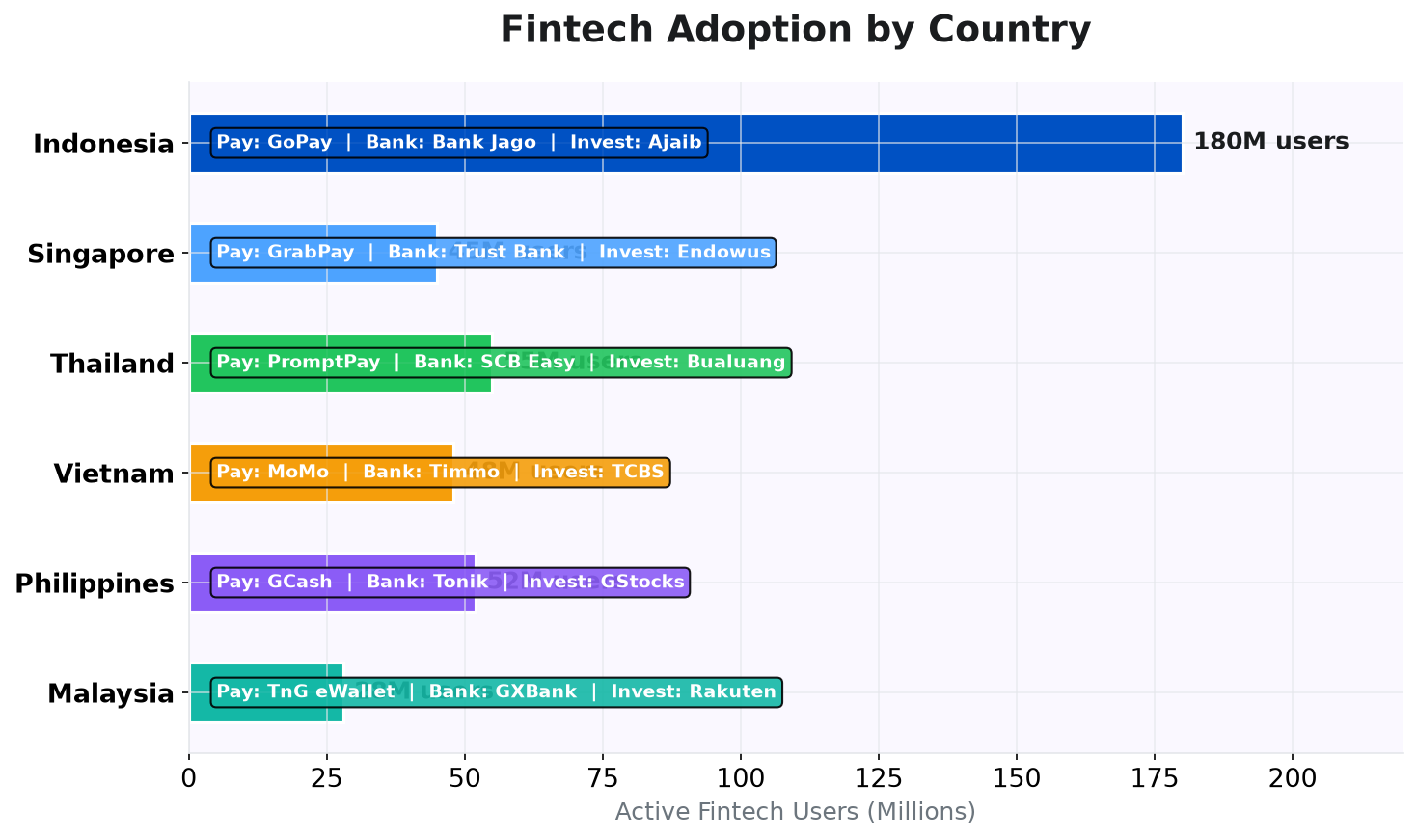
While Sakana AI is significantly smaller than its Western competitors in terms of funding, its unique nature-inspired approach allows it to achieve competitive results with far fewer resources. This efficiency-first philosophy could prove decisive as the AI industry matures and cost becomes a critical differentiator.
FAQ
What does "Sakana" mean?
"Sakana" (魚) means "fish" in Japanese. The name reflects the company's philosophy of building AI systems inspired by nature — particularly the collective behavior of fish schools, where simple individual agents create complex group intelligence.
Who is Llion Jones?
Llion Jones is the CTO and co-founder of Sakana AI. He is one of the eight co-authors of the 2017 paper "Attention Is All You Need", which introduced the Transformer architecture — the technology behind ChatGPT, Gemini, Claude, and virtually every modern AI language model. He left Google to co-found Sakana AI in Tokyo.
How is Sakana AI different from OpenAI?
While OpenAI focuses on building the largest possible monolithic models (like GPT-5), Sakana AI takes a fundamentally different approach. Instead of one giant model, Sakana AI orchestrates multiple smaller specialized agents that work together — inspired by how schools of fish coordinate. This can achieve similar performance at lower cost.
Is Sakana AI profitable?
As of 2026, Sakana AI is still in its growth phase and has not publicly disclosed profitability. However, with its first commercial product (Sakana Marlin) now available and major enterprise partnerships in place, the company is generating revenue from its AI solutions.
What is The AI Scientist?
The AI Scientist is Sakana AI's automated research system that can conduct the entire scientific research process — from hypothesis generation to experimentation to paper writing — without human intervention. Published in Nature, it represents a breakthrough in automated AI research and is part of Sakana AI's broader vision for Recursive Self-Improvement.
Can I invest in Sakana AI?
Sakana AI is currently a private company and not publicly traded. Investment is limited to venture capital firms and institutional investors. However, the company's rapid valuation growth and potential IPO in the future make it one to watch for retail investors interested in the Asian AI market.
- Sakana AI is Japan's most valuable private AI startup at $2.65 billion valuation
- Co-founder Llion Jones co-invented the Transformer architecture that powers all modern AI
- The company's nature-inspired approach (evolutionary algorithms, swarm intelligence) offers a more efficient alternative to scale-first AI
- Flagship products Fugu and Marlin target enterprise clients in finance, defense, and research
- The AI Scientist, published in Nature, demonstrates fully automated scientific research
- Total funding of $379 million with backing from MUFG, Khosla Ventures, and Lux Capital
- Strategic partnerships with SMBC Group, Japanese government, and defense sector
Sources: Sakana AI Official Website (sakana.ai), Nikkei, TechCrunch, Nature, Tracxn, Axis Intelligence. Data as of June 2026.