Russia's energy sector remains one of the world's largest, but it now operates under a permanently different set of rules. Since Western sanctions and price caps were imposed in 2022, Moscow has re-routed its oil and gas trade toward Asia, built a formidable "shadow fleet" of tankers to move crude, and renegotiated its role in global energy markets. Here is a factual look at how Russia's energy strategy has evolved and what it means for global supply.
Scale and Dependence
Oil and gas are foundational to the Russian economy. The two together account for roughly 60 percent of Russia's merchandise exports and approximately 30 percent of GDP, though those figures are approximate and fluctuate with oil prices. Russia is among the world's top three crude producers and exporters, alongside the United States and Saudi Arabia.
Despite sanctions, Russian crude and condensate production climbed above 9 million barrels per day in mid-2025, according to Reuters. The International Energy Agency (IEA) projects Russian oil output to average about 8.9 million barrels per day in 2026 and 8.8 million in 2027 — modest declines, but far from the collapse that some predicted when sanctions were first imposed.
- Oil & gas share: ~60% of exports, ~30% of GDP (approximate, price-dependent)
- Production (mid-2025): above 9 million bpd — Reuters
- IEA 2026 forecast: ~8.9 million bpd average output
- Top producers: Rosneft and Lukoil, together ~half of crude exports — CNBC
The Pivot to Asia
The defining change in Russian energy since 2022 has been geography. Facing EU embargoes and price caps, Russia redirected its seaborne crude exports from Europe to Asia. Roughly 80 percent of Russia's oil exports in 2025 went to China and India, according to OilPrice based on shipping and trade data.
India has become a pivotal buyer. Russian crude imports averaged 1.76 million barrels per day in India's 2024-25 fiscal year, up about 7.3 percent year-on-year, making Russia India's top crude supplier. Chinese buyers, led by state firms such as CNPC, absorb the majority of the remainder. This Asian pivot has kept Russian volumes flowing and provided a price outlet, albeit at a discount to international benchmarks.
Price Caps and the Shadow Fleet
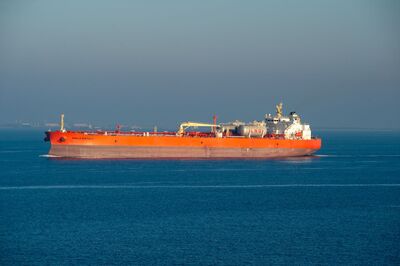
In late 2022, the G7 and Western allies imposed a US$60 per barrel price cap on Russian seaborne crude, designed to limit the revenue Moscow earns while keeping oil flowing to global markets. Russian crude has largely sold below the cap, and Moscow has built an extensive network of older, often uninsured tankers — the so-called "shadow fleet" — to move exports and evade enforcement.
The strategy has had costs. Yields have declined, and the IEA reported Russian oil-export revenues fell roughly 43 percent year-on-year in one month in 2025 even as volumes held up. Sanctions enforcement, including U.S. designations on the shadow fleet and on Rosneft and Lukoil in October 2025, has raised shipping costs and intermittently stalled Asia-bound trade.
The Gas Equation
Natural gas tells a similar story with a sharper margin squeeze. With the loss of European pipeline sales, Russia has pivoted supply toward China via the Power of Siberia pipeline. But Beijing pays significantly less: Russian Economy Ministry estimates suggest gas sales to China generate roughly 30 to 40 percent less revenue than former European sales over 2025-2028. At its peak, Europe received up to about 180 billion cubic metres a year from Russia, far more than the projected capacity of pipelines to China.
Moscow continues to pursue new export routes and buyers, and production from major gas and LNG companies such as Gazprom and Novatek continues. Yet the sanctions-era reality is that Russia, while resilient, has accepted lower unit economics in exchange for market access in Asia.
Global Implications
The long-term outlook for Russian energy is more contested than ever. New U.S. legislative proposals in August 2026 seek to tighten pressure on energy income and the shadow fleet, with the possibility of tariffs of up to 500 percent on Russian imports including oil and gas. Whether such measures translate into effective enforcement and reduced Russian volumes remains uncertain.
For the global market, the practical effect of Russia's adaptation has been to keep the world supplied with oil even as Russia's share of Western markets has collapsed. That has cushioned prices but also locked in a more fragmented, higher-cost and geopolitically volatile energy landscape — one in which buyers in Asia hold growing leverage over one of the world's largest energy exporters.
Key Takeaways
- Oil and gas still fuel ~30% of Russian GDP and ~60% of exports.
- ~80% of Russian oil exports now go to China and India, up from Europe.
- The G7 price cap and shadow fleet have trimmed revenues but not volumes.
- Gas sales to China earn 30-40% less than former European sales.
- Russia has adapted but accepted lower unit economics for Asian access.