INDUSTRY.co.id - Jakarta - Indonesia needs to build its battery industry gradually before pursuing large-scale battery cell production. This approach is considered capable of reducing risks while making manufacturing development more manageable.
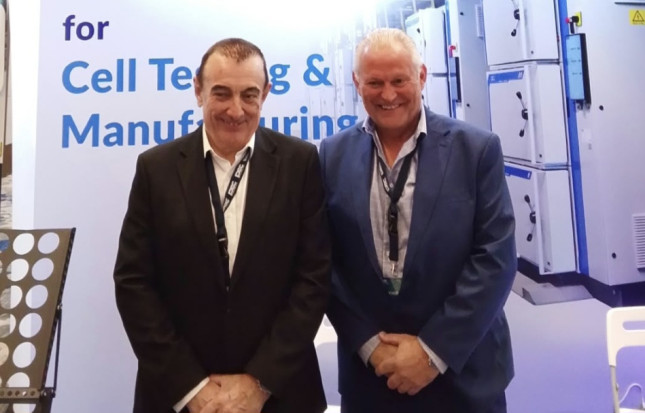
This was conveyed by the CEO of Project Engineering Contracting (PEC), Raf Goossens, at the International Battery Summit (IBS) 2026 event. According to him, Indonesia needs to learn from battery projects in Europe that failed and caused huge losses.
"In my opinion, the most important thing is to do it step by step. This process must be done gradually so that it is easier to manage and the risk is lower," he said to industry.co.id, at the International Battery Summit (IBS) 2026, held on August 26-28, 2026 at the JIEXPO Convention Centre & Theatre, Jakarta.
According to him, this approach can be done through a hybrid manufacturing model. This model allows production to be developed gradually according to the company's capabilities and readiness.
in addition to building production capacity, Indonesia also needs to determine the part of the battery production chain that has the most potential to be developed. One of them is the manufacture of electrodes, which is an important part of battery cells.
"In my opinion, there is a huge opportunity to make electrodes. This is a huge opportunity because electrodes have high value and are very important in batteries",he said.
The battery production chain includes several stages, from mining and refining materials to manufacturing cathode and anode materials and the coating process. After the cells are assembled, the process continues with electrolyte filling until the final product is formed.
Raf assessed that, Indonesia does not need to master all these stages at once. Each country or industry player can focus on areas where it has the strongest capabilities and expertise.
"If everyone tries to do everything, I think usually the results aren't much. But if we focus, we can get results," said Raf.
According to him, focusing on a specific field can help Indonesia strengthen its battery manufacturing capabilities. This is also important so that the industry doesn't just chase capacity, but is able to compete globally.