INDUSTRY.co.id - Jakarta, PT Industrial Area Jababeka Tbk (PT Jababeka Tbk), and the industrial development company started its history and work from the granting of West Java Provincial Government license in 1989. At that time the permit was granted to a consortium of 21 employers to develop a Land of excavation of bricks and unproductive tile, to become an industrial area.
The consortium was led by two entrepreneurs named Setyono Djuandi Darmono and Hadi Rahardja, who later became the founder of the industrial development company called Jababeka. The word Jababeka is an acronym or abbreviation of West Java - Bekasi. A blend of the name Bekasi District as a place of industrial estate was developed, and the blessings obtained from the government of West Java province.
As a first step, 500 hectares of land was developed in Cikarang, Bekasi, with Unilever and United Tractors as the first tenants in need of plant development in the region.
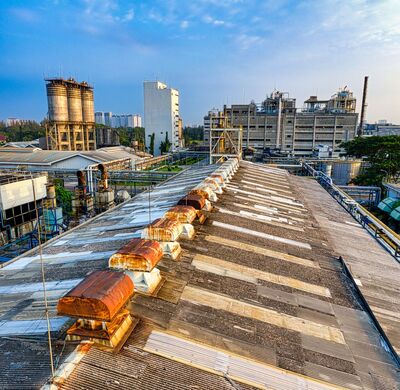
After experiencing various expansions in subsequent years, Jababeka industrial estate development in Cikarang has filled about 1,650 companies from 30 countries as tenants. These companies include Samsung Electronics, ICI, Mattel, KAO, United Tractors, Akzo Nobel, and Nissin. In this region has accommodated as many as 730,000 workers and 10,000 expatriates.
This area also continues to develop into a self-contained city of 5,600 hectares and is the largest industrial area listed throughout Southeast Asia, as Jababeka City. The city of Jababeka has grown from a green field into a large community with a population of about 1 million people.
The area is located 35 kilometers east of Jakarta, and has a strategic location along Bekasi Cikampek corridor; Jababeka City is accessible by toll road and train with 45 minutes distance from Jakarta business center.
In order to complement the supporting facilities of production process, the manager of the area in this case Jababeka build power plant Bekasi Power. The 130 MW power plants is officially operated in 2013 to meet the energy needs of the industrial and surrounding areas.
In addition to power generation, Jababeka also develops logistics facilities serving import-export activities other than domestic distribution, namely Cikarang Dry Port. Cikarang Dry Port is the first and only Integrated Customs Service Area (KPPT) in Indonesia, enabling import-export customs clearance to be resolved within the Jababeka industrial estate. Cikarang Dry Port has IDJBK international port code. Since its construction in 2011, Cikarang Dry Port has a capacity of up to 250,000 TEUs and comprehensive facilities such as warehousing and container depots. In early 2016 Cikarang Dry Port has been established by the government as one of the implementers of Bonded Logistics Center (PLB) in Indonesia. Together with the Indonesian Textile Association (API), Cikarang Dry Port developed a logistics center for cotton commodities.
Previously Jababeka has also equipped its industrial estate with two units of Water Treatment Plants. Under the control of a subsidiary of PT Jababeka Infrastruktur, the company owns and operates an Integrated Water Treatment Plant (IPAB) and an integrated Wastewater Treatment Plant (IPAL). Clean water for industrial and drinking water for the community is processed and supplied by two water treatment plants with a capacity of 80,000 cubic meters.
Jababeka also provides two wastewater management units or Waste Water Treatment Plants in its industrial estate, as a Pollution Prevention program aimed at facilitating the management and control of the impacts arising from industrial activities. Two wastewater treatment facilities have a capacity of up to 42,000 cubic meters.
Through Jababeka Infrastructure also developed fiber optic facility, which facilitate tenant to relate between branch office and head office or also Data Center.
For commercial facilities, up to now, there have been nine hotels in Jababeka City such as Holiday Inn, Horison, Fave Hotel, Batiqa, and several other hotels, including those developed by the President Executive Club (PEC).
As a complement and a means of boards for workers, a number of prestigious residential projects were developed in the township. Located in Jababeka Residence for example, PT Graha Buana Cikarang developed the Oscar and Beverly Hills dwellings. Beverly Hills is a home stay concept home that gets a good reception especially from expatriates who work in Jababeka and foreign film workers working in Movieland, as well as following Beverly Hills Platinum.
The two residential projects have completed an existing residential project, D'JavaResidence. The latter name was developed with the concept of modern dwelling that incorporates elements of Javanese cultural elements in it, including on the quality of the landscape. The cluster is also equipped with the best facilities including Single Gate Cluster, Club House, Green Garden and Jogging Track.
Speaking of occupancy in the city of Jababeka, certainly cannot be ignored Simprug Garden project as a minimalist modern minimalist shelter that provides inner cluster garden facilities and maximum green space. The city of Jababeka also developed Tropikana Garden, a luxurious residential concept for those who are young and dynamic.
The very classy residential cluster in the city of Jababeka is The Veranda Golf Townhouse. The cluster is designed as a masterpiece dwelling that values quality and lifestyle that blend with nature. Located just beside Jababeka Golf Course, it allows its occupants to enjoy the natural green.
Not only that, Jababeka City also equipped with mix use project Plaza Indonesia Jababeka which in 2019 is targeted to be completed. Facility number one is complementing existing commercial facilities, including 28 hypermarkets and supermarkets, ranging from Farmers Market, and Giant. Plus culinary facilities and restaurants in Hollywood Junction with renowned tenants such as J.Co, Bread Talk, Oriental Sapo, Sate Khas Senayan, A & W, DCost, Bari Uma Ramen and Solaria. As for fast-food restaurants include McDonalds, Dominos Pizza, and hundreds of other local restaurants scattered within the area.
Jababeka City also equip its facilities with health access, carrying the concept of Medical City currently has operated three national hospitals namely Permata Keluarga Hospital, Harapan Keluarga Hospital, and Mitra Keluarga Hospital. Jababeka is also keen in his duties as a social and friendly developer of elderly parents; the persereon founded Senior Living D-Khayangan which became a place of integrated health care for the elderly in maximizing their productivity in their golden age.
And for educational facilities for all communities in the region, has established 16 national and international education institutions, including; Al-Azhar, BPK Penabur, Saint Leo and other schools. Including, educational facilities developed by Jababeka itself is Elementary School, Junior High School, Senior High School President and President University which has 7000 active students recorded.
The Jababeka area is also equipped with a variety of sports and recreational facilities including Jababeka Golf & Country Club, D Warriors Outbond, Mukti Jababeka Authority Stadium as well as large-scale venue events, Jababeka Convention Center. In providing a sense of security and comfort for the environment around the area area also stands Bekasi Police, and Makorem TNI AD.
On the investment side, Jababeka Industrial Estate also includes the government-appointed area to run the Ease of Direct Investment Construction (KLIK) program launched by the Investment Coordinating Board (BKPM) RI.
The complete range of facilities in the area makes Kota Jababeka a successful example of a new city in Indonesia, where investors and business actors are safe and comfortable with a myriad of infrastructure facilities and a pampered community with an ideal life where people can live, worship, work, Shopping, playing and even learning integrated within the city of Jababeka.
Thus, it looks so great function and role of industrial estate in a process of economic development in new city. The presence of an industrial estate, an area originally reserved for clustering or industrial clustering in one area, can then develop into a new city or city. At least this is seen through the evidence and the existing track record of developers coded KIJA this.
When talking the industrial area is plural is defined as a region where the centralization of the industry equipped with infrastructure facilities that include land and strategic location. The provision of various facilities such as electricity, water, telephones, roads and landfills is what eventually can trigger the development of this area into a new self-contained area, or a new city.
Stories in some countries are similar. Industrial area at the end becomes a stimulus for the development of a new area or city. Naturally, an industrial estate is developed in the outermost areas of a city. It is usually prepared with good transportation access, including roads or even railways. Just look at a number of rapidly growing industrial zones along the Thames River at Thames Gateway, London, England.
And already in its nature, an industrial estate is built near transportation facilities, especially more than one mode of transportation, and easily reach the airport. The development of industrial estates near these facilities is certainly to reduce the level of investment on the infrastructure side. This will also reduce the high cost of logistics that must be carried by the tenants in the industrial area.
Next the 'established' location will also attract investors to develop their new business in the region. Clearly the government in this case the Ministry of Industry also briefly mentioned the role of industrial area in increasing export figures. The development of industrial estate can also be considered as one of the lighter from the presence of foreign investors into the country.
But it must be realized that investment in the development of a new region is not small. With the situation is still lack of availability of supporting infrastructure, not infrequently a new area must be built through the pattern of cooperation with local governments. So it can be happen mutual support in the local economic development efforts.
Indeed there is no rule of thumb that says how much the minimum investment needed to build a new area but the less available infrastructure, the higher the value of investment that must be disbursed.
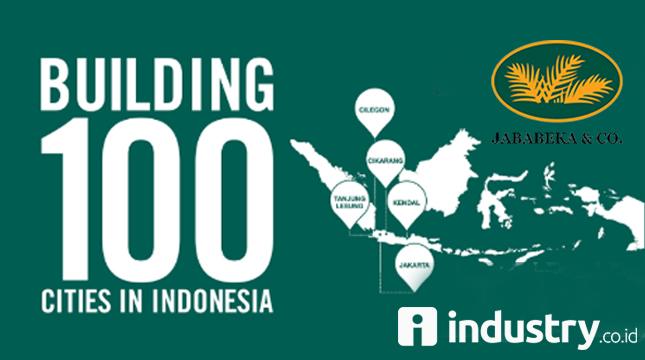
Under these circumstances, it may be necessary to appreciate the steps of PT Kawasan Industri Jababeka Tbk (Jababeka) which has a program to build 100 New Towns throughout Indonesia. Jababeka is targeting to develop the construction of 100 new cities in all provinces in Indonesia. If this program is touted a big dream, then this is a big dream that should be given full support.
But not just a dream, because Jababeka has started the step, and at least there are 17 memorandum of understanding of the new city development plan that is ready to be realized by Jababeka.
The process of developing the new area or city can now be seen in Kendal Central Java, Tanjung Lesung Banten, and Morotai in Halmahera. Not that there are no challenges to face. Of course the need for readiness and participation from the community and local government, both in terms of energy and skills to be synergies in a development program.
If you see a multiplier effect that will create both direct and indirect benefits through the presence of an industrial estate, or a new city in an area, then there is no other word than full support of the plan Jababeka develops 100 Cikarang Baru City in every Province of Indonesia . (NN)