
Japan has long been the world's leading industrial robotics nation, and in 2026 that position is stronger than ever. As global labour shortages, rising wages and the demand for precision manufacturing converge, Japanese robot makers are shipping record volumes while a demographic crunch at home pushes automation deeper into the economy. For investors, engineers and business leaders watching global manufacturing, Japan's robotics industry offers a clear window into the future of industrial production.
Japan's Robot Industry at a Glance
The numbers tell a compelling story. According to the International Federation of Robotics (World Robotics 2025 report), some 542,000 industrial robots were installed globally in 2024, more than double the level a decade earlier. Japan remains the largest single manufacturer and exporter of industrial robots, supplying roughly 60 percent of global supply by some industry estimates.
After a soft 2024, when annual production dipped just over 11 percent year-on-year to around 692 billion yen, Japanese robot makers rebounded sharply. The Japan Robot Association (JARA) reported record orders of 324.5 billion yen (about US$2.2 billion) in the first quarter of 2025, up 14.2 percent year-on-year and the strongest quarter since its records began in the 1980s. That momentum continued, with Q4 2025 orders of 271.4 billion yen marking a sixth straight quarter of year-on-year growth.
- Global installations (2024): 542,000 industrial robots, double the level 10 years earlier — IFR
- JARA Q1 2025 orders: 324.5 billion yen, up 14.2% year-on-year, a record
- Full-year 2025 estimate: production up 21% to 837.3 billion yen, first growth in three years — JARA
- Japan's global supply share: roughly 60% (approximate, industry consensus)
Who Makes the Robots
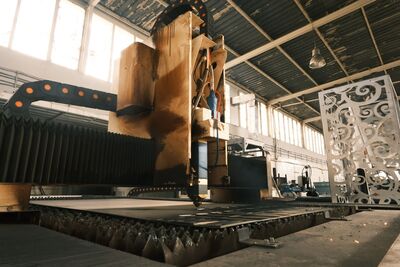
Japan's industrial robotics sector is anchored by a handful of global heavyweights. FANUC, Yaskawa Electric, Kawasaki Heavy Industries, Denso and Mitsubishi Electric dominate the market, supplying everything from precision assembly arms for electronics to heavy-duty robots for automotive welding and material handling.
These companies benefit from a unique ecosystem. Decades of experience in servo motors, motion control and precision machining gives Japanese firms a lasting edge in the high-precision robots that dominate automotive and electronics production. Their dominance is not accidental: Japan's history of lean manufacturing, its dense network of component suppliers, and its early adoption of automation in the 1970s and 1980s all helped build a cluster that competitors have struggled to replicate.
Beyond the Factory Floor
While industrial robots remain the core business, Japanese firms are increasingly moving into service and humanoid robots. Reports from Reuters and Bloomberg in 2025 highlighted Japan deploying thousands of cat-eared companion robots and expanding humanoid research, capitalising on a domestic market that is ageing rapidly. The same automation expertise applied to factory floors is now being redirected toward caregiving, retail, hospitality and healthcare, where Japan's shrinking workforce creates urgent demand.
Drivers of the Global Robot Boom
The surge in robot orders is not random. Several structural forces are pushing automation higher around the world, and Japanese manufacturers sit directly in the path of these tailwinds:
- Labour shortages: Ageing workforces across Japan, South Korea, Germany, China and the United States reduce the pool of available factory workers.
- Rising wages: Higher labour costs improve the return on investment of automation, making robots more attractive on pure economics.
- Reshoring and near-shoring: Companies are pulling production closer to home, where robots help offset higher domestic labour costs.
- Precision and quality: Modern electronics, electric vehicle batteries and semiconductor fabs demand tolerances beyond human capability.
What This Means for Global Manufacturing
The implications of Japan's robot boom extend far beyond Tokyo and Nagoya. A tight global robot market means slower deliveries and higher prices for manufacturers everywhere, particularly small and mid-sized firms that compete with larger rivals for the same production capacity. At the same time, the rapid advance of robotics is reshaping the economics of where goods are made, helping to decouple wages from competitiveness.
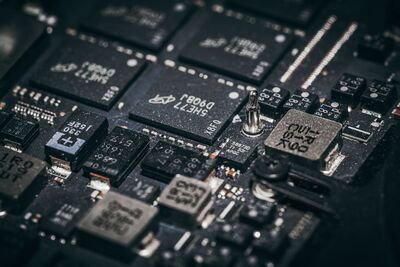
For the semiconductor industry, Japan's robotics strength is part of a broader technological revival. The country is rebuilding its chip manufacturing capabilities, with emerging fabs and equipment makers such as Tokyo Electron and Advantest supplying critical tools to the industry. Robotics and precision machinery form the manufacturing backbone that supports this ambition.
Japanese robot makers are direct beneficiaries of these converging trends. With order books at record levels and production capacity expanding, the industry is well positioned for sustained growth through 2026 and beyond. Investors and analysts following the sector should watch JARA's quarterly data, along with capacity announcements from the five dominant players, as leading indicators of global industrial automation trends.
Key Takeaways
- Japan supplies roughly 60% of the world's industrial robots, with record orders in 2025.
- Global installations reached 542,000 units in 2024, more than doubling over a decade.
- FANUC, Yaskawa, Kawasaki, Denso and Mitsubishi anchor the sector.
- Labour shortages, rising wages and reshoring are driving the automation boom.
- Service and humanoid robots represent the next frontier for Japanese robotics.