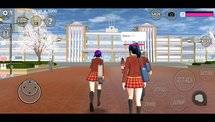
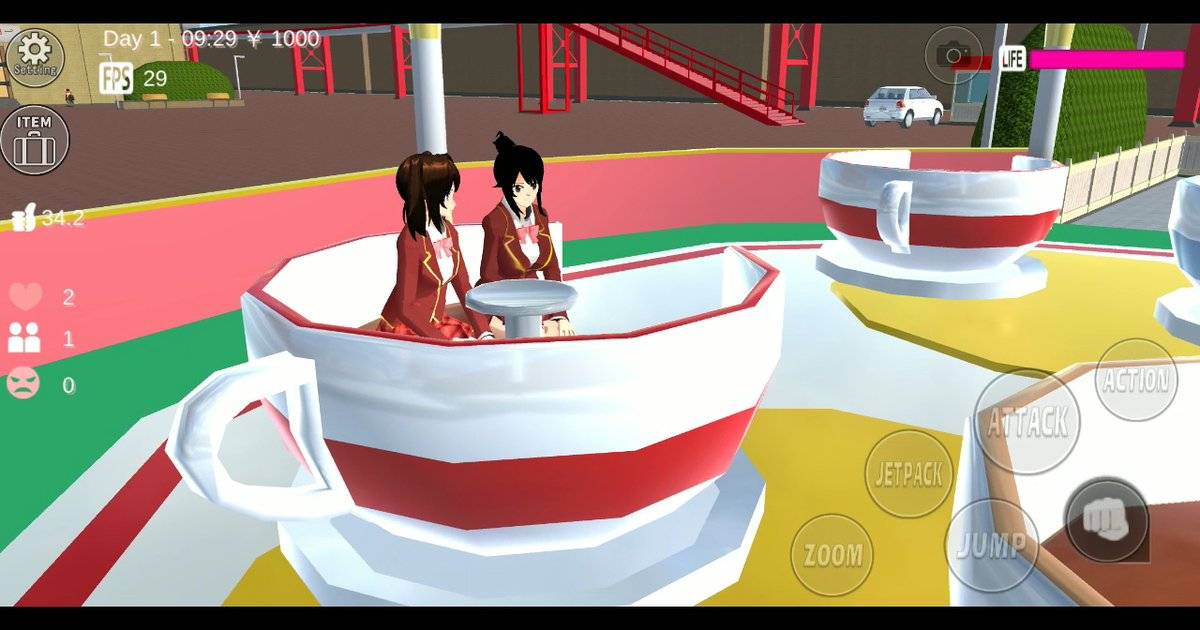
A school drama filmed inside Sakura School Simulator can fall apart before the story even begins. One character walks across a courtyard, the camera swings too far, a conversation stretches on for a minute, and the viewer still has no idea what the episode is about. The difficulty is rarely a shortage of costumes or buildings. It is usually a shortage of decisions.
Garusoft's school-life game gives players a town, characters, outfits and the freedom to arrange their own scenes. It does not write the script for them. That freedom has helped produce everything from light-hearted classroom sketches to elaborate mystery serials on video platforms. It also means a creator needs to think a little like a director.
This guide develops one short school story from a basic idea to a finished five-minute video. The examples are original creative exercises, not official missions or scenes supplied by the developer.
Highlights
- A five-minute Sakura School Simulator story works better with one problem than five unrelated plot twists.
- You can plan a school drama using ordinary in-game locations and characters; custom Props sets are optional.
- Writing the ending first helps decide which scenes deserve recording time.
- Clear framing, readable subtitles and controlled movement matter more than expensive editing effects.
- Record short takes and keep the original clips until the final video is safely exported.
Quick answer: To make a Sakura School Simulator drama, choose one conflict, plan a beginning, complication and resolution, pick three or four locations, record short shots for each scene and edit them into a clear sequence. A five-minute episode needs a strong opening and an understandable ending, not a huge cast.
Start with a question the audience can answer
Good stories often begin with something simple: Who took the missing notebook? Why did a student refuse to enter the classroom? What is hidden inside an abandoned room? A question gives viewers a reason to stay. It also gives the creator a test for every scene: does this moment help answer it or make the answer more interesting?
Consider this original example. A student finds a handwritten note near the school gate that says, "Meet me before sunset. Come alone." There are several possible stories here. It could be a prank, an invitation to apologise or the beginning of a mystery. Choose one. When the video tries to become a comedy, romance, ghost story and action sequence at once, the audience has to work harder than the creator intended.
For a first episode, limit the speaking cast to two or three characters. Give each a job in the plot. One wants something; another knows something; a third can complicate the search. A large crowd may look dramatic, but it introduces additional dialogue, blocking and editing work without necessarily making the story stronger.
A five-minute plot that fits a mobile recording session
| Approximate screen time | Story beat | Example action |
|---|---|---|
| 0:00–0:25 | Hook | A student finds an unsigned note beside the school gate |
| 0:25–1:15 | Setup | A friend warns that a similar note appeared last week |
| 1:15–2:30 | Investigation | The pair search a classroom and notice a familiar bag |
| 2:30–3:45 | Complication | They confront the wrong person and lose the note |
| 3:45–4:40 | Reveal | The real writer steps forward with a believable explanation |
| 4:40–5:00 | Closing beat | One small detail leaves room for another episode |
These timings are a writing tool, not a technical requirement. An amusing conversation may need longer. A suspense scene might work with no dialogue at all. The point is to know roughly what the camera is supposed to capture before pressing Record.
Write the ending before building sets. If the note belongs to a friend planning a birthday surprise, the important locations are the gate, a classroom and a meeting place. A ten-room hospital or a giant shopping mall would add little. If the note belongs to an unknown character, the ending can reveal a clue rather than an identity. Both versions work; they simply promise different stories.
Choose locations that help the plot
Sakura Town's familiar spaces are an advantage. A school corridor instantly communicates that a character may be late for class. A rooftop provides distance and privacy. A public street allows an accidental meeting. The audience does not need a long introduction to understand these places.
Try to keep the route logical. If one scene ends outside the classroom and the next begins in a distant corner of the map, show a short journey or an establishing shot. Otherwise the story may feel like a slideshow of unrelated locations. A two-second transition often solves the problem more effectively than a paragraph explaining where everybody went.
Player-made buildings accessed through Props IDs can make a story visually distinctive, but download and inspect them before committing to the script. One code may reproduce a structure without the lighting, characters or camera angles from the video that advertised it. Using only built-in locations is perfectly reasonable for a first drama.
Read also: Sakura School Simulator: All Food Menus and Prices in Sakura Town — a useful reference when staging café or after-school scenes.
Give every character a recognisable purpose
A character does not need a complicated biography to work on screen. They need a clear desire and a reason to act. The student with the note wants an explanation. The best friend wants to protect them. The third character may want to keep a secret without being cruel. That is enough to create a small conflict.
Use costumes as visual shorthand. A change of clothes can signal a different day or an event, but constant outfit changes can make a continuous conversation difficult to follow. If a character is wearing a blue jacket in one shot, check that the same character does not suddenly appear in an unrelated uniform in the next shot unless the passage of time is clear.
Names matter too. Keep subtitle labels consistent when several characters speak. A viewer should not have to guess whether "Mio", "Mio Aida" and "the girl" are meant to be three different people. For a project with multiple episodes, maintain a one-page character note with the name, visual appearance, main relationship and any important secret.
Plan dialogue that sounds like people talking
School-drama dialogue often becomes too formal because the writer tries to explain everything. Real conversations contain short replies, hesitation and interruption. Give characters different rhythms. One might answer directly; another avoids the question. The difference tells the story without a narrator spelling out their personalities.
In the missing-note example, the line "I have been searching for the identity of the person responsible for distributing an anonymous message" feels stiff for a short video. "You got one too?" is more immediate. The next character can answer, "Last week. I threw it away." That exchange creates new information in a few seconds.
Read each line aloud before recording. If it is difficult to say naturally, shorten it. Subtitles are especially important for viewers watching on mute during a commute or in a classroom break. Keep them on screen long enough to read, and do not squeeze four sentences into a single caption.
For a Malaysian audience, English subtitles can widen accessibility, while Malay subtitles may help local viewers who prefer them. If you create both versions, check the meanings rather than relying on automatic translation of jokes, slang or cultural references. This is an editorial choice, not evidence that any particular language version will perform better.
A simple shot list for one scene
Instead of recording the entire episode in one take, divide a scene into pieces. The school-gate scene might need a wide shot showing the entrance, a medium shot of the student approaching, a close view of the note and a reaction shot. Those pieces give the editor a choice of pacing and hide small mistakes in character movement.
Hold the virtual camera steady at the start and end of each shot. If a character walks out of frame, do not immediately chase them with a wild camera spin. Cut to a new angle. When recording on a mid-range phone, a stable view of a simple location may look better than a detailed crowd scene with unstable frame rate.
The game has camera-related tools, but availability and labels vary with updates. Practise the required framing inside your installed version rather than assuming every tutorial shows the same menus. You can also use the phone's built-in screen recorder and make the final cut in a video editor without installing a game modification.
Edit for pace, not for the number of effects
The first edit should be almost boring: place clips in story order, trim long pauses, remove accidental menu openings and make sure the dialogue can be followed. Watch the sequence once without music. If it makes sense in silence, the story has a foundation. Music can then reinforce a mood rather than cover a weak scene.
Do not put a dramatic sound effect on every movement. A quiet moment before a reveal can be more effective. If a door opening is meant to frighten the audience, the surrounding shots should establish why that door matters. Effects work best when the viewer has been given something to anticipate.
Keep the audio levels consistent. A sudden loud sting may be an intentional horror technique, but it should not drown out the next sentence. Use music and sound effects that you have permission to publish; uploading a game video does not automatically grant rights to every popular song used in an edit.
Build a repeatable production checklist
Before recording, settle the cast, costumes, locations, essential props and plot ending. Then check device storage, battery and screen-recording settings. A short test clip will show whether subtitles remain readable and whether the interface obstructs important action. If possible, record in the same screen orientation throughout the project.
After recording, save the original clips in clearly named folders. Put school-gate clips together, then classroom clips, then the reveal. This sounds like extra administration, but it prevents a familiar problem: the editor remembers an excellent reaction shot and cannot find it among forty nearly identical recordings.
If a take is ruined because a character stops moving or an NPC crosses the scene, do not automatically delete everything. Cut around the interruption or retake only that shot. The advantage of recording in pieces is that one error does not have to destroy a whole episode.
How to give the video a title without promising a fake game feature
The title should describe the story people will actually watch. "The Note at Sakura High: A Five-Minute Mystery" makes a clear promise. "Secret Ghost Mission Unlocked in Sakura School Simulator" is a different claim and should not be used if the ghost was invented for a roleplay production. Viewers searching for official missions deserve a factual answer, not a scripted scene presented as game documentation.
The description can explain that the episode is a fan-made story recorded in Sakura School Simulator. Mention the main characters and the central question, but avoid giving away the final reveal. A short chapter list helps viewers return to a scene without wasting their time.
Thumbnails matter for storytelling too. Pick one clear confrontation or unusual object; avoid covering every available space with captions and arrows. For suspense, the viewer should notice the mystery before needing to read five lines of text.
Read also: Sakura School Simulator Update History 2024–2026: Every Version for recent camera, editing and appearance-related changes.
Three other story premises worth trying
The missing lunch box: A student blames a classmate, but the lunch was moved by a well-meaning friend. This is an easy comedy with a small cast and ordinary school locations. The reveal can be funny without humiliating the accused student.
The empty classroom: Someone notices the same classroom light on after school each day. The investigation leads to a simple explanation — perhaps a forgotten rehearsal or a friend preparing for a competition. The tone depends on the camera and music, not on inventing an official supernatural feature.
The rooftop promise: Two friends agree to meet after an argument. One arrives late, and the other almost leaves. The conflict is emotional rather than technical. A creator can film most of it with two characters and three camera angles, which makes it a useful practice project.
Each premise has a manageable scale. That is the real advantage for beginners: learn how to complete one story, then experiment with bigger sets and longer episodes.
Keep continuity notes so one scene still matches the next
Continuity is the quiet work that makes a small production feel deliberate. Imagine filming the first half of a conversation in the afternoon, then returning the following day for the other character's reply. The student suddenly has a different hairstyle, the chair has moved and the scene takes place under entirely different lighting. Viewers may not identify every mistake, but the cuts will feel distracting.
Keep a simple scene log with four columns: location, costume, important objects and emotional state. The last column matters because a character who was upset in the previous scene should not become cheerful without a reason. The log can be a note on the same phone used for filming; there is no need for complicated production software.
Take a still image of each camera setup before moving on. That image helps you reproduce approximate framing if a line needs to be recorded again. Also note which character appears on which side of the screen. If two students are speaking, switching their screen positions without a transition can make the conversation difficult to follow even when the dialogue is clear.
Props continuity matters as much as costume continuity. If the plot revolves around a missing note, show where the note is at the end of each scene. A clue that is left in a classroom cannot suddenly appear in the school gate scene without explanation. Small details are what make a mystery satisfying when the audience looks back at the ending.
A dialogue sample: turning an ordinary clue into a scene
Consider an original scene where two friends are standing near the school gate. The first asks, "Did you put this in my bag?" The second says, "What is it?" The first replies, "A note. It says you know what happened yesterday." That is the hook. The audience now wants to know what happened, and the second character has a reason to react.
Instead of having the second character explain the whole story, let them hesitate: "I thought nobody saw that." Cut to a close shot of the note, then back to the first student. The next line can be, "Saw what?" Three short exchanges have generated tension without introducing a villain, a monster or an expensive set.
The rest of the scene should move the story forward. Perhaps the friend agrees to show an unusual object in a classroom. Perhaps they refuse and walk away. Both choices produce a new action. Avoid letting the dialogue circle the same question for another minute. When a character says something important, either the other person changes their mind or the situation becomes harder.
This approach works in comedy too. A student might believe that someone has stolen their lunch, only to learn that a friend carried it to a different room to protect it from the rain. The joke comes from the misunderstanding and the character's embarrassment, not from endlessly repeating the accusation. A good five-minute episode has room for pauses, but every pause should carry an emotion or a question.
Plan subtitles and phone-friendly framing from the beginning
Many people discover a video while scrolling on a mobile screen. Fine details at the edge of a wide frame may be difficult to read, especially when the video is shown inside a social app with controls overlaid. Plan for the final aspect ratio before recording. A vertical short video and a wide YouTube episode can use the same story, but they do not always use the same camera composition.
Leave space for captions without covering a character's face or the object central to the scene. Choose short lines and allow the viewer time to read. If two characters speak quickly, identify the speakers through position, timing or subtle labels. Do not rely entirely on colour to distinguish them, because captions need to remain understandable in different viewing conditions.
Export a short test clip and watch it on another phone rather than only inside the editing timeline. Check whether the opening sentence is readable, whether important audio is audible at ordinary volume and whether the final reveal is visible. This inexpensive test can expose framing problems before an entire series is recorded.
Finally, decide what the audience should feel at the end. A comedy wants a release of tension; a mystery may leave a deliberate unanswered question; a friendship story may end with reconciliation. Choosing the feeling does not make a story predictable. It gives the shots, acting and music a common direction.
Frequently asked questions
Can I make a Sakura School Simulator drama without mods?
Yes. Use the game's characters, built-in town locations, costumes and camera possibilities, then record and edit the footage. Player-made Props sets are optional.
Is a roleplay story an official mission?
No. A fan-written drama is a creative production. It should not be advertised as an official quest unless the in-game mission actually exists and has been verified.
How long should my first video be?
Five minutes is a practical exercise rather than a rule. A clear three-minute story is better than a ten-minute episode padded with walking and repeated conversations.
Should I write dialogue before filming?
Write at least the important exchanges and the ending. A loose shot list allows improvisation while keeping the story coherent.
Do I need a powerful phone?
A higher-performance device makes complicated sets easier, but simple scenes can reduce the load. Garusoft recommends more than 3 GB of RAM and a Snapdragon 820-class chip or better for smooth play. Test your recorder alongside the game before attempting a large scene.
Conclusion
The strongest Sakura School Simulator drama is not necessarily the one with the biggest house or the most costumes. It is the one where a viewer understands the problem, cares enough to follow it and gets an ending worth the time. Begin with a small cast, write the final scene, and let the camera serve the story.
Sources and verification notes
- Sakura School Simulator — official Google Play listing for the game's nature and developer notes.
- The story premises and filming workflow above are original editorial suggestions, not claims about built-in quests.