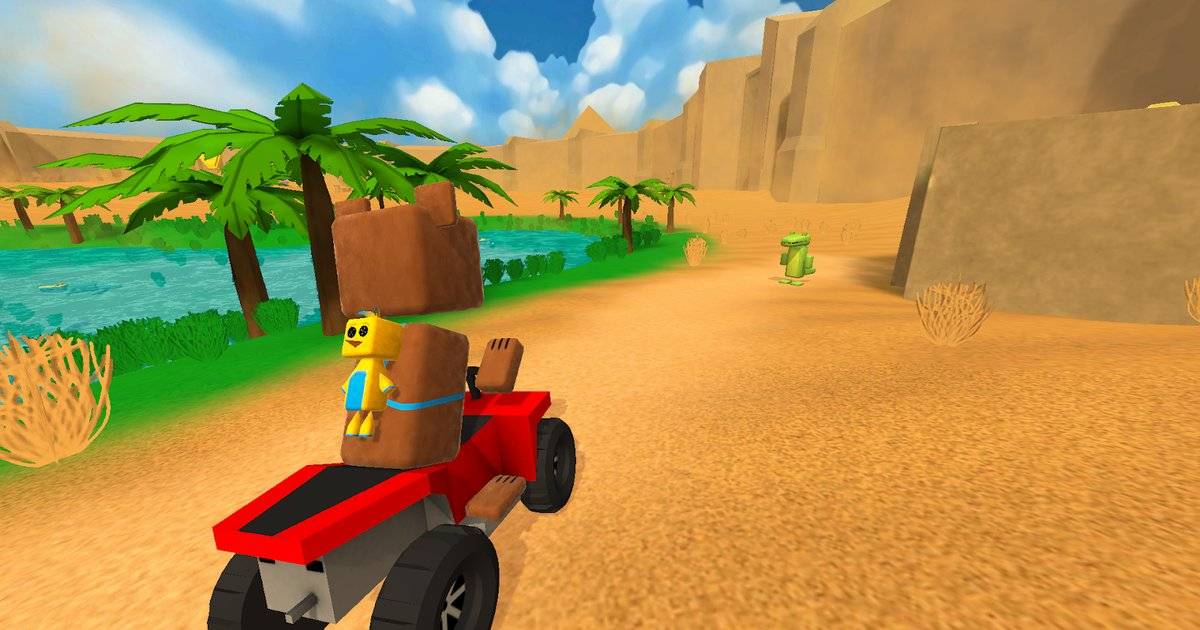
Super Bear Adventure players who have rescued the bears and learned the familiar routes can find themselves facing a different problem: the platforming no longer feels particularly dangerous. Update 13.0 gave experienced players an answer with Hardcore Mode, a tougher version of several familiar worlds that changes the obstacles and enemies rather than simply asking them to repeat the original levels.
That distinction matters. A player who knows every shortcut in normal Turtletown should not assume the same rhythm will carry them through Hardcore. The space may look familiar, but the threats demand renewed attention. This guide explains what Earthkwak Games has confirmed and how to approach the challenge without confusing it with unverified rumours about permanent save loss or special hidden requirements.
Highlights
- Hardcore Mode was introduced with Super Bear Adventure update 13.0 on July 20, 2026.
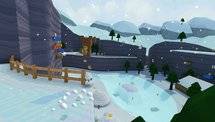
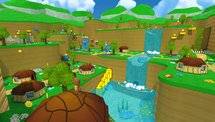
- The developer identifies four supported worlds: Turtletown, Snow Valley, Beemothep Desert and Giant House.
- Hardcore versions alter levels with additional enemies and obstacles; they are not merely cosmetic filters.
- Later updates corrected Hardcore medal displays and chest behaviour, and removed stickers from the mode.
- The most productive preparation is to practise movement and route reading before chasing completion times.
Quick answer: Super Bear Adventure Hardcore Mode is a more demanding challenge available for Turtletown, Snow Valley, Beemothep Desert and Giant House in the 13.0 update. Expect changed enemy and obstacle layouts. Practise the standard route, learn safe landing points and approach each new section separately rather than rushing for a medal immediately.
What Hardcore Mode actually changes
Earthkwak Games describes Hardcore as a new gamemode that alters supported levels with new enemies and obstacles. The official notes do not present it as a separate sequel, and they do not say that selecting Hardcore permanently deletes a player's story save. Those details are worth emphasising because "hardcore" means different things in different games.
In Minecraft, for example, the same word is associated with a particular survival rule set. That comparison should not be imported into Super Bear Adventure without evidence. Here the confirmed change is to the platforming challenge. If players see videos promising a secret one-life mode or a new final boss, they should check whether the claims actually refer to this update or to community-made footage.
Hardcore is also not available in every place on the map. The developer's list covers the four main worlds named above. Mole challenges and the Arcade World are different activities, even if some are difficult enough to feel like hardcore challenges in their own right.
The four worlds at a glance
| World | What to practise first | Why it helps |
|---|---|---|
| Turtletown | Jump timing, camera control and basic enemy spacing | Good place to rebuild fundamentals |
| Snow Valley | Approaching platforms patiently and reading surfaces | Uncertain footing punishes rushed movement |
| Beemothep Desert | Route memory and controlled momentum | Familiar landmarks help when obstacles change |
| Giant House | Judging scale, edges and camera angles | Large objects make distance harder to read |
This table offers practical training priorities, not an official breakdown of every Hardcore obstacle. The precise layout can change with patches, so the final route should be checked in the game version installed on your device.
Learn the normal course before testing the harder one
A player who cannot complete the standard version consistently will struggle to identify what Hardcore actually adds. Spend one session revisiting the normal level without trying to set a personal best. Notice the transitions between open space, narrow ledges and enemy encounters. Find places where the camera becomes awkward or a missed landing would send Baaren a long way back.
Then enter the Hardcore version and compare it with that memory. Look for added enemies, changed obstacles and places that demand different timing. This is more effective than trying to memorise a speedrun video frame by frame. A creator may have a different input setup, camera habit or game version, and the route may leave no margin for a beginner's mistake.
You do not need to perfect the entire world in one attempt. Break it into a few recognisable stretches. A useful first goal is to reach the next safe platform cleanly three times, not to defeat every threat while moving at maximum speed.
Movement matters more than frantic button presses
Super Bear Adventure expanded movement in version 12.0 with wall running and ledge-grab adjustments. Those abilities changed how players approach vertical spaces. A wall run can help recover height, while a ledge grab can offer a second chance after a jump that was slightly short. Neither move compensates for poor camera positioning if the player has no idea where the safe landing point is.
Before attempting a difficult sequence, stop on solid ground and look at the path. Identify the first jump, the direction of the next turn and any enemy that might interrupt the approach. Use a deliberate input rather than holding the direction control indefinitely. In a 3D platformer, camera rotation changes how movement feels, so keep it consistent during precision sections.
A good practice routine is surprisingly modest: take the same short jump several times at different starting distances. Once the landing becomes repeatable, add the next movement. Speed follows consistency; trying to gain both simultaneously usually means learning neither.
When enemies disrupt a familiar platform route
The developer confirms new enemies in Hardcore, but a useful guide should not pretend that every foe behaves identically across all worlds. Watch one enemy from a safe position before attacking. Is the danger caused by contact, a projectile or pressure that forces a badly timed jump? The answer changes the decision.
If the enemy blocks the only narrow landing, rushing forward may create two problems at once. It can be better to wait for a safer opening and clear the encounter before attempting the platform sequence. If there is space to move around it, choose a route that avoids unnecessary combat rather than treating every encounter as mandatory.
Do not keep attacking blindly after a missed hit. In three-dimensional movement, a failed strike can be a positioning issue, not a shortage of damage. Recenter the camera, recover space and try again when the target is clearly reachable.
A three-stage training plan
Stage one: survive the opening section
Choose one Hardcore world and play the beginning with no time target. Stop after the first notable obstacle and write down what changed from normal mode. The aim is to remove surprise. If a section repeatedly causes failure, leave it alone for a moment and rehearse the equivalent movement in a safer space.
Stage two: build a reliable route
Join two or three sections into one continuous attempt. Keep the same camera approach and do not improvise a new shortcut each time. Reliable routes reduce the number of decisions a player must make under pressure. Notice which attempts fail because of movement and which fail because an enemy arrives at the wrong moment.
Stage three: think about medals or speed
Only after completing a route consistently should you worry about improving the time or a displayed medal. Super Bear Adventure's 13.0 patch series included fixes for incorrect Hardcore medal times and displays. If a screenshot from an older version looks different, check the current game before assuming your achievement is missing.
A medal is satisfying, but the learning process is easier to understand when you distinguish completion, clean completion and fast completion. Each asks for a different level of precision.
Why update version matters in Hardcore
Hardcore arrived in 13.0.0, but subsequent patches changed some details. The 13.0.1 notes fixed incorrect medal times and an interaction involving untouchable chests. Version 13.0.2 addressed an issue in which Hardcore could remain active outside levels. Version 13.0.5 removed stickers from Hardcore Mode. These are not just trivia for completionists; they explain why a video recorded immediately after release may not match what players see several months later.
Earthkwak also updated the game's underlying engine in version 13.0.7 and changed the minimum supported Android version to 7.1. Version 13.0.8 addressed physics problems introduced in an earlier patch. If the controls seem to behave differently from an old tutorial, check the version first. Avoid making claims about the cause of every fall without a controlled test.
The official changelog is the best place to confirm whether a reported Hardcore bug has been acknowledged or repaired. It is more reliable than a clip with a dramatic title and no version information.
Read also: Super Bear Adventure Update History: Every Major Version 2017–2026.
Common mistakes that turn a difficult level into an exhausting one
The most frequent problem is trying to recover from every error immediately. A player who misses a ledge may keep pressing movement controls and lose a chance to grab the edge. Another player might land safely but immediately turn the camera toward an enemy, falling off the platform in the process. The game rewards quick reactions, but those reactions need a clear purpose.
A second mistake is fighting every enemy while standing in the least forgiving part of a course. Move combat to a larger area when possible, then return to the precise jump. A third mistake is playing the same section repeatedly without knowing why it failed. If all ten attempts end in the same place, stop and change the method rather than simply adding an eleventh.
Finally, avoid treating a phone's inconsistent frame rate as a personal lack of skill. Close unnecessary apps, keep enough battery and use practical settings supported by the game. A stable device does not guarantee success, but unstable movement makes learning difficult.
The value of recording a failed attempt
A short gameplay recording can reveal details a player misses in the moment. Watch one failure and focus on the last second before the mistake. Was Baaren already moving sideways? Did the camera rotate before the jump? Was the enemy closer than expected? A slow review turns an emotional reaction into a specific question.
There is no need to publish the footage. The recording is a training tool, like watching back a football drill. If you share it with a friend, include the version and the world name so that the advice applies to the same challenge.
For Malaysian players using entry-level phones, keep recordings short if screen capture places extra load on the device. The goal is evidence of a difficult moment, not a high-resolution archive of an entire evening.
Is Hardcore the best place to collect everything?
Not necessarily. If your goal is to rescue bears, learn the main story or explore secrets for the first time, the normal experience may be a more welcoming route. Hardcore is designed as a renewed challenge for familiar levels. It does not follow that every collectible or goal is best pursued while dealing with the harder obstacle layout.
This distinction matters because games with several progression systems can make players feel that the hardest setting is always the "correct" one. It is not. Choose the mode that matches the task. You can return for a tougher run after completing ordinary exploration, and you will probably enjoy the challenge more once the geography is familiar.
Four world-specific drills to make Hardcore less intimidating
Turtletown: practise a clean first approach. This is a sensible starting point because players have usually spent a lot of time learning the opening world's movement language. Choose a route with a few jumps and try to clear it without a rushed camera turn. Then deliberately pause where a new obstacle appears in Hardcore. The pause is not wasted time; it lets you compare the revised section with a route you already know. Once the movement is repeatable, add the enemy encounter or extra obstacle to the same practice loop.
Snow Valley: treat every transition as a decision. A difficult platform section becomes harder when a player keeps moving before identifying the next safe point. Break the route into a landing, a look, and a new movement. Practice entering each jump from a similar starting position. If your input is inconsistent, slow the approach rather than making last-second corrections that create a second error. The goal is not a dramatic leap. It is to reduce uncertainty about where Baaren will land.
Beemothep Desert: use landmarks to preserve direction. Familiar scenery can encourage overconfidence. In Hardcore, an added obstacle may make a memorised path inefficient or unsafe. Find a clearly visible landmark and use it to orient the camera after each turn. Avoid chaining an enemy encounter directly into a long jump unless you have enough room to reset your movement. If the obstacle layout differs from a video guide, trust what your current version shows instead of forcing an older route.
Giant House: control the camera around scale changes. Oversized environments can make distances difficult to judge because an object that resembles a small step may actually require a precise jump. Stop on a stable surface and view the next target from more than one angle. Practise short movements before committing to the longer sequence. When the camera becomes obstructed, move to a position where you can clearly see the edge rather than repeatedly pressing jump while guessing.
These are training drills, not developer-provided route maps. They are designed to help a player learn unfamiliar obstacles without inventing exact enemy positions or claiming that every platform behaves the same way across versions.
How to turn a failed run into useful information
After a mistake, ask one question: "What was the first thing I could have done differently?" The answer should be specific. "I jumped before the camera showed the landing" is actionable; "I am bad at Hardcore" is not. Write down one adjustment and test it for a few attempts before making another change. That approach helps separate a genuine movement problem from an unlucky encounter.
If a stage repeatedly fails, reduce its complexity during practice. Work on the landing in the normal level, then return to the Hardcore version. You can also rehearse movement at a slower pace before combining it with an enemy. A player who tries to master a new jump, a camera turn and a combat action in one attempt has too many variables to learn from the result.
Keep a simple record of progress. Note the section reached, the reason for failure and whether the same problem appeared again. A player might discover that most attempts do not fail at the supposed hardest obstacle; they fail during a routine approach because they are rushing to reach it. Correcting that early mistake can improve the whole run more than studying another boss tactic.
If you record footage, use it for one question at a time. A clip can show the moment a ledge was missed or a camera turn began too early. A slow review may reveal that the character was already moving sideways before the jump. Avoid drawing a conclusion from a single frame if the actual physics changed over several seconds.
When to stop chasing the perfect medal
Medals can motivate practice, but the display is only useful if it reflects the game version you are playing. Earthkwak's 13.0 series included changes to medal times and fixes for incorrect displayed values. Comparing an old screenshot with a new version can create the impression that the game failed to record an achievement when the threshold or display has simply changed.
A better sequence is to finish once, finish again with fewer mistakes, then focus on time. That progression creates measurable improvement without relying on one unusually lucky attempt. If you are becoming frustrated, switch back to normal exploration for a while. The value of Hardcore is that it gives familiar worlds new demands, not that every session must end in a record.
For players sharing attempts online, include the world and version in the caption. A clean run with a clearly identified build is more useful to other players than a vague claim that a route is "the fastest ever." It also helps viewers compare movement techniques without accidentally treating patched glitches as permanent mechanics.
A sensible first session for someone returning after months away
Players who last opened Super Bear Adventure before the 13.0 update may need to relearn more than the Hardcore route. Movement options, character customisation and various interface details changed across recent major versions. Begin by revisiting the ordinary tutorial or a familiar part of the game. Use the first ten minutes to remember the jump timing, camera controls and ledge behaviour. A returning player should not treat rusty movement as evidence that the new mode is unfair.
Next, choose one Hardcore world and make a short exploratory run. Do not record a target time yet. Identify where the first new enemy appears, which obstacle demands a different approach and where a missed jump is most costly. A second run should aim to repeat the successful parts rather than improvise another route. Once you can reach the same checkpoint consistently, add speed or a harder objective.
This is also a good time to confirm that your installed version includes the latest relevant fixes. If an old video shows different medal values or strange physics, check the date before trying to recreate it. A clear starting point makes subsequent improvement easier to measure, and the session remains enjoyable even when no medal is earned.
Frequently asked questions
When was Hardcore Mode added to Super Bear Adventure?
It arrived in update 13.0.0, released on July 20, 2026, according to Earthkwak Games' official changelog.
Which worlds have Hardcore Mode?
The developer lists Turtletown, Snow Valley, Beemothep Desert and Giant House.
Does Hardcore Mode permanently delete a save when you fail?
The official 13.0 feature description does not establish that rule. Do not assume that the term "hardcore" works exactly as it does in a different game.
Why does an old guide show different medals or chest behaviour?
Several 13.0 patches fixed Hardcore medal displays and chest interactions. Compare the guide's version with your installed update.
Is Hardcore Mode the same as a mole challenge?
No. Hardcore alters four main worlds; mole challenges are separate bonus activities introduced in other parts of the game.
Conclusion
Super Bear Adventure's Hardcore Mode works best when approached as a different route through familiar territory. Learn the normal level, study what has changed and practise one stretch at a time. A steady landing and a sensible decision around an enemy will do more for progress than racing the clock before you understand the course.
Sources and verification notes
- Super Bear Adventure — official news and version history, especially versions 13.0.0–13.0.8.
- Tactical advice in this article is editorial guidance, not a claim that a particular enemy route has been tested on the reader's device.