Industry.co.id - Long before Grand Theft Auto VI promised a modern-day Vice City, GTA was a game that let you watch the streets from above. Cars were tiny, characters were little more than pixels, and missions didn't come wrapped in lengthy cinematic scenes. Yet the idea that made it different was already there: you could decide where to go and how to get there.
Almost three decades later, that idea still sits at the heart of the series. What has changed is the way Rockstar Games builds its cities, tells its stories, gives its characters a life beyond the next mission, and keeps players coming back. From the original Grand Theft Auto in 1997 to GTA VI, scheduled for November 19, 2026, each generation has found a new way to make an open world feel worth exploring.
Following GTA's history also means following the evolution of video games themselves. There was a time when driving through a fully three-dimensional city felt revolutionary. Then car radios began making fictional places sound like real ones. Eventually, multiplayer grew from a side attraction into an evolving world that could hold players' attention for years. Here's how the series got there, including a few spin-offs that deserve more credit than they usually receive.
GTA's evolution at a glance
- 1997–1999: GTA establishes its top-down urban sandbox, giving players the freedom to roam and cause trouble.
- 2001–2004: GTA III, Vice City and San Andreas help define the modern 3D open-world game.
- 2005–2009: The Stories games, GTA IV and Chinatown Wars explore different perspectives, platforms and storytelling styles.
- 2013–2025: GTA V introduces three playable protagonists, while GTA Online becomes a long-running multiplayer world.
- 2026: GTA VI is scheduled to bring Jason and Lucia to Vice City and the state of Leonida on November 19.
It All Started with the Original Grand Theft Auto in 1997

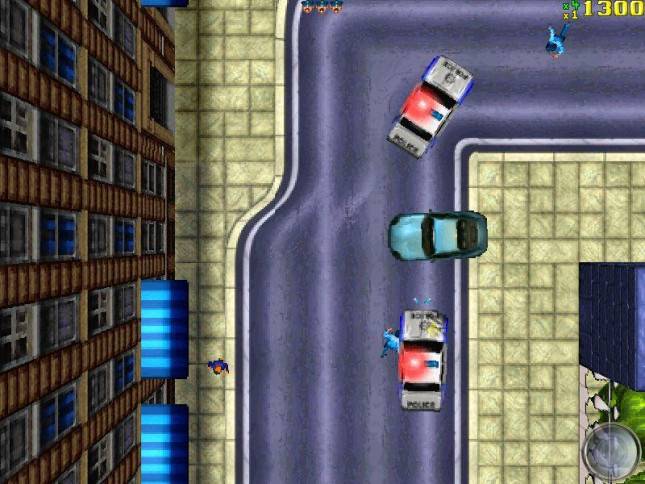
The original Grand Theft Auto (1997) used a top-down view that gave players the freedom to explore a city on their own terms. (Source: https://www.viedegeek.fr/article/jeu-culte-grand-theft-auto-windows-1997/)
The first Grand Theft Auto arrived in 1997, back when Rockstar Games was nowhere near the household name it is today. It was developed by DMA Design, a Scottish studio that would eventually become Rockstar North, and originally published by BMG Interactive. The series had a recognizable identity long before its leading characters had recognizable faces.
Instead of pushing you through a straight line of levels, GTA gave you a city, some vehicles, a set of jobs and several ways to approach them. You could take a car, head toward a mission, turn down a different street or attract the attention of the police along the way. The top-down camera kept the action at a distance, but the freedom felt unusually immediate.
Visually, it was worlds away from today's GTA. No convincing facial expressions, no elaborate interiors and no dramatic skyline stretching beyond the windshield. But the limitations helped reveal what the game was really about. Roads weren't simply background scenery. They were a playground where a dozen small decisions could change the next few minutes.
The original game also introduced the names Liberty City, Vice City and San Andreas. None of them looked anything like the three-dimensional places players would later recognize, but they became landmarks in the series' history. If Vice City makes you think of Tommy Vercetti, or of GTA VI's return to that part of the GTA universe, the story behind that association goes all the way back here.
Another detail is easy to overlook: this first GTA didn't ask you to spend dozens of hours following one character's personal drama. The immediate goals involved completing jobs, earning points and navigating the chaos of the streets. Storytelling would become much more important later, but the pleasure of driving around simply to see what happened was established from day one.
1999: GTA London and GTA 2 Showed the Formula Had Room to Grow
The original concept proved flexible enough to support Grand Theft Auto: London 1969 and London 1961 in 1999. These expansions took the action away from the series' fictional American cities and into a British setting drawn from an earlier era. They showed how a change of place, period, vehicles and local flavor could give the same basic game a completely different atmosphere.
That same year, Grand Theft Auto 2 stayed with the overhead viewpoint while developing the underlying systems. Its futuristic Anywhere City was caught between rival gangs, and your relationship with those groups mattered more than before. Helping one faction could make life considerably more difficult with another.

GTA 2 (1999) retained the overhead viewpoint while adding a more elaborate city and competing factions. (Source: https://www.mobygames.com/game/1097/grand-theft-auto-2/)
It wasn't a complete reinvention, but it was an important step. GTA was no longer just about escaping the police after causing a disturbance. The city was beginning to feel like a place where competing groups had their own interests, grudges and conflicts. Later games would turn those ideas into turf wars, criminal organizations and sprawling networks of characters.
GTA 2 still looked down on its world from above, of course. Anyone whose first experience was GTA V may find its controls unfamiliar today. In the series' bigger story, though, GTA 2 did a valuable job: it stretched the original formula while the technology needed for the next major leap was still catching up.
2001: GTA III Changed What an Open World Could Look Like

GTA III (2001) brought Liberty City into a fully 3D open world and helped redefine the series. (Source: https://www.imdb.com/title/tt0277723/mediaviewer/rm3801044736/)
That leap finally arrived in 2001 with Grand Theft Auto III. Liberty City was no longer a collection of streets viewed from above. Players could now explore it from a third-person perspective, moving among buildings, alleyways, elevated roads, traffic and pedestrians. For the time, the sense of being inside a functioning city was remarkable.
Moving from 2D to 3D meant far more than adding polygons. With the camera down near the character, new details suddenly mattered: how a car handled a corner, what a neighborhood looked like after dark, or how difficult it was to pursue another vehicle through busy streets. The environment became part of the experience rather than a map connecting one job to the next.
The protagonist, Claude, was famously quiet. Supporting characters, story scenes and a connected sequence of missions did much of the narrative work instead. But players still had room to take a detour, experiment with another vehicle or leave the next story mission for later. That mixture of freedom and cinematic storytelling began to look a lot like the GTA formula we recognize today.
Car radio became a bigger part of that identity, too. Presenters, commercials, music and jokes about popular culture made Liberty City sound as though life continued beyond the player's immediate objectives. Crossing from one island to another could be enjoyable even when nothing dramatic happened. The journey had its own soundtrack and personality.
In its official look back at the GTA Trilogy, Rockstar treats GTA III as a landmark in the development of three-dimensional open worlds. Its influence can be seen across later action games, even though different studios have taken the genre in very different directions. That's why 2001 matters as more than a year when GTA's graphics received an upgrade.
Read Also: The Best GTA Games of All Time: Which One Left the Biggest Impression?
2002: Vice City Proved a Virtual City Could Have a Personality

GTA: Vice City (2002) gave the series its unmistakable tropical setting, 1980s atmosphere and Tommy Vercetti. (Source: https://m.thegtaplace.com/vicecity/pc-screenshots/)
Just a year after GTA III, Rockstar released Grand Theft Auto: Vice City. This time, the setting drew heavily on Miami in the 1980s. You could see it in the buildings and fashion, the cars and beaches, and especially the music playing through the radio. Vice City didn't merely offer another map. It offered a particular time and place.
Tommy Vercetti was also a different kind of lead. He had a voice, ambitions and a personality that shaped the way the story unfolded. Following his rise through the criminal underworld gave players a stronger sense of why the next job mattered. At times, it felt like stepping into a flamboyant gangster film set against a sun-soaked backdrop.
What players remember about Vice City is rarely limited to its square mileage. A row of palm trees, a stretch of waterfront or one song on the radio can bring the whole game back to mind. Rockstar was discovering that the atmosphere of an open world could be just as memorable as its size.
There was more to do beyond the central story as well. Property ownership became a bigger part of the experience, with some businesses tied directly to progression. Buying a place wasn't simply a way to show off a growing criminal empire. It could make the player feel more invested in the city and its economy.
If GTA III opened the door to 3D, Vice City showed why the world on the other side needed character. A map can be twice as large and still be forgettable if every neighborhood feels interchangeable. That lesson would shape San Andreas, GTA V and the expectations players now bring to the next Vice City.
2004: San Andreas Made the Character's Life Part of the Game

GTA: San Andreas (2004) followed Carl Johnson, also known as CJ, through an expanded state spanning three cities. (Source: https://www.pushsquare.com/games/ps2/grand_theft_auto_san_andreas)
Two years later, Grand Theft Auto: San Andreas pushed the formula in another direction. Carl Johnson, better known as CJ, returned to Los Santos after a tragedy in his family. What followed involved old friends, neighborhood gangs, family loyalties and trouble with the authorities. And as the story expanded, so did the world around him.
San Andreas wasn't confined to a single city. Players could travel between Los Santos, San Fierro and Las Venturas, with countryside, highways, deserts and mountains in between. Distance began to mean something different. Taking a long road trip felt like an adventure of its own rather than a quick drive between mission markers.
But the game's scale wasn't its only attraction. Players could visit the gym, change CJ's clothes and appearance, ride bicycles, improve different skills and watch his physical condition change. These systems weren't all essential to finishing the story, but they helped make CJ feel like someone whose daily life existed outside the main plot.
Gang territory brought another layer of consequence to familiar streets. Certain neighborhoods could change hands as the story moved forward, making parts of Los Santos feel like contested ground rather than fixed scenery. There was plenty to do between story missions, too, and the game rarely insisted that every activity had to be completed.
That helps explain why San Andreas remains such a favorite. Some players remember its radio stations. Others know the railway route almost by heart. Many still laugh about the missions they struggled to finish. With so many systems and distractions, two people could spend dozens of hours in the same game and come away with quite different memories.
From a design standpoint, San Andreas was a bold experiment. As the map grew, Rockstar also expanded character progression, vehicles, side activities and minigames. The challenge was making all of those parts feel connected. Not every player loved every system, but the ambition was impossible to miss.
Don't Forget GTA Advance, Liberty City Stories and Vice City Stories
It's tempting to tell GTA's history by jumping straight from San Andreas to GTA IV. That skips several games that helped bridge the gap. In 2004, Grand Theft Auto Advance brought the series to Game Boy Advance, adapting its familiar crime-and-driving formula to the handheld's technical limits.
Then came Grand Theft Auto: Liberty City Stories in 2005 and Vice City Stories in 2006. Both became closely associated with the PlayStation Portable, delivering a surprisingly substantial GTA experience on a device that fitted in your hands. Some versions later appeared on other platforms.
Liberty City Stories followed Toni Cipriani, while Vice City Stories put Victor Vance at the center of a tale set before the events of Vice City. Revisiting familiar locations through different characters and time periods made those cities feel more layered. The streets might look familiar, but the people living in them had changed.
These games proved two useful things. First, Rockstar could tell a new story without inventing a completely new city every time. Second, a handheld GTA didn't have to feel like an unrelated spin-off. For a generation of PSP owners, the Stories games were their first real introduction to the series.
They weren't always as expansive as the main console releases, but their place in GTA history is secure. Rockstar was learning how to preserve the series' identity while adapting it to different controls, screens and hardware limitations.
2008: GTA IV Turned Toward Realism and Consequence

GTA IV (2008) rebuilt Liberty City with a more realistic tone and Niko Bellic at the center of the story. (Source: https://www.gta4.net/screenshots/)
When Grand Theft Auto IV arrived in 2008, Rockstar changed the mood again. Liberty City was rebuilt with a denser, more realistic look. Vehicles felt heavier, characters reacted more dynamically to impacts, and the traffic and pedestrians made the streets seem busier than before.
Its protagonist, Niko Bellic, came to America hoping to escape his past. But the fresh start promised by his cousin Roman turned out to be far less straightforward than expected. GTA IV was a darker, more personal story than the neon-lit excess of Vice City.
That shift changed the way players related to missions. The next task wasn't only about the reward money or the car waiting at the end. Relationships, personal choices and emotional consequences were more central to the experience. GTA's familiar dark humor was still there, but it existed in a more somber world.
On the technical side, GTA IV used newer console hardware to make movement and physics more convincing. Collisions, vehicle speed and the way pedestrians reacted all felt different from the older games. Some players loved that weight and unpredictability. Others preferred the more immediate driving of San Andreas.
That debate says something important about GTA's development: progress has never been a perfectly straight line. More realism doesn't automatically mean more fun for everyone. Rockstar has always had to strike a balance between simulation, accessibility and the simple pleasure of playing.
2009: GTA IV's Episodes and Chinatown Wars Offered Different Perspectives
Rockstar expanded GTA IV's world with two additional stories: The Lost and Damned and The Ballad of Gay Tony. Each followed a different protagonist through the same city, showing how one setting could support stories with very different tones.
Johnny Klebitz drew players into the world of outlaw motorcycle clubs. Luis Lopez, meanwhile, became caught up in the nightlife business and the trouble surrounding Liberty City's glamorous side. Their stories crossed paths with events from GTA IV, but neither was simply Niko Bellic's adventure retold from another angle.
It was an interesting experiment in connected storytelling. Rockstar could deepen the world through other lives without immediately building a full sequel. Today, the idea of expanding a game through additional narratives is familiar. For GTA, these episodes helped establish just how much one city could hold.
Also in 2009, Grand Theft Auto: Chinatown Wars launched on Nintendo DS before reaching other devices. It brought back a high, top-down-style perspective, but with a distinctive presentation suited to its hardware. Huang Lee's adventure through Liberty City showed that GTA could still be compelling without chasing the most realistic graphics possible.
Chinatown Wars was a useful reminder that better games aren't always made by adding more polygons or stretching the map. Sometimes, the smartest design choice is to understand the device you're building for and make something that feels at home on it.
2013: GTA V Put Three Leading Characters in One Story

GTA V (2013) introduced three playable protagonists: Michael, Franklin and Trevor. (Source: https://www.rockstargames.com/gta-v)
Grand Theft Auto V arrived on September 17, 2013, bringing players back to Los Santos and the surrounding Blaine County. Its biggest change wasn't simply another larger open world. Rockstar built the main story around three protagonists: Michael De Santa, Franklin Clinton and Trevor Philips.
Each came from a different background and carried a different set of problems. Michael was struggling with family life and the consequences of his criminal past. Franklin wanted opportunities beyond the streets he knew. Trevor was unpredictable enough to send almost any situation spinning out of control. Together, they gave the story a pace and energy that a single lead might not have delivered.
Players could switch between them during much of the game, seeing Los Santos through three separate lives. A luxury home, an ordinary neighborhood or a remote stretch of desert meant something different depending on who you were controlling. The map stayed the same, but the perspective changed.
Heists became another defining feature. Certain robberies involved preparation, choosing a plan and carrying out the job with other characters. The missions still had their scripted boundaries, of course, but their presentation gave the action the feel of a crime film that players could help direct.
GTA V also expanded the range of things to do away from its main storyline. There were vehicles to collect, wilderness to explore, mountains and beaches to visit, and plenty of smaller distractions. Even players in no hurry to finish the campaign had reasons to keep driving around.
The game went on to cross several console generations and reach PC, with technical improvements along the way. But graphics alone don't explain how a 2013 release could remain so relevant for so long. A much bigger part of that story is GTA Online.
GTA Online Turned a Story-Driven Game into an Evolving World
GTA Online launched in October 2013, shortly after GTA V. Its early appeal was straightforward: Los Santos became a place where other people could join you for races, cooperative jobs, competitive activities and unpredictable encounters.
Over the years, Rockstar added businesses, vehicles, properties, heists, races and community events. Players stopped asking only whether they'd finished Michael, Franklin and Trevor's story. They also began looking forward to the next update, the next vehicle purchase or the next evening of activities with friends.
That was a major change for a series historically best known for its single-player campaigns. GTA Online gave people a reason to build routines around a fictional city. Some concentrated on earning in-game money, others enjoyed racing, and some simply found their own entertainment in the company of other players.
Outside the official GTA Online experience, roleplay communities extended that idea even further on PC. Community-run servers developed their own rules and activities, turning everyday routines such as jobs, businesses and fictional professions into the point of playing. It's worth keeping those unofficial community experiences separate from the modes and features Rockstar itself provides.
GTA Online has also changed what people expect from the next GTA. A new installment is no longer judged solely on its campaign. Players want to know whether its world can stay interesting after the credits roll. Exactly what approach GTA VI will take on that front still depends on official details and the finished game.
GTA V Kept Changing: From PlayStation 3 to GTA V Enhanced on PC
The first GTA belongs to the early days of home computers and the original PlayStation. GTA V has had a remarkably different life. It began on PlayStation 3 and Xbox 360 in 2013, later arriving on PlayStation 4, Xbox One, PC, PlayStation 5 and Xbox Series X|S.
The original PC release came in 2015. Then, on March 4, 2025, Rockstar released the GTA V Enhanced upgrade for PC. Eligible existing PC owners could access the updated version, while Legacy remained available for players who needed a different level of compatibility.
Enhanced introduced additional technical features on supported systems, including graphical improvements, certain modern rendering technologies and GTA Online features previously available on newer consoles. But hardware requirements still matter. The word 'Enhanced' is not a promise that every computer will run the game smoothly.
There's a practical catch, too: GTA V Legacy and Enhanced are separate PC versions where multiplayer compatibility is concerned. Friends who want to play together need to make sure they're using compatible versions. It's a small example of the challenges that arise when a game continues evolving for more than a decade.
By this point, GTA's history can no longer be measured only by the arrival of the next Roman numeral. A single game can change technically and structurally over years of updates.
2021: The Definitive Edition Brought the Classic GTA Trilogy Back
While GTA V continued its long run, Rockstar released Grand Theft Auto: The Trilogy – The Definitive Edition in November 2021. The collection brought GTA III, Vice City and San Andreas together in updated versions for modern hardware.
The idea was appealing: give new players an easier way to discover the three games that helped define GTA's 3D era. The reworked releases included visual updates and control adjustments. Even so, playing a modernized version isn't necessarily identical to experiencing the original release, whether because of presentation changes or technical differences.
For returning players, nostalgia is an obvious attraction. Newcomers, however, should bring expectations that suit the games' origins. GTA III still has the structure of a 2001 release. Vice City reflects early-2000s mission design. San Andreas has systems and pacing rooted in its own era. A visual overhaul doesn't automatically turn them into GTA V.
The collection underlined something worth remembering: GTA's back catalogue still matters. Nobody needs to finish every earlier installment before playing GTA VI, but revisiting them gives the series' newer ideas a richer context.
GTA Release Timeline: From 1997 to 2026
Here's a chronological look at the main releases and several important spin-offs. The years refer to their initial releases, not every port, reissue or regional launch.
| Year | Game | What it brought to the series |
|---|---|---|
| 1997 | Grand Theft Auto | Top-down urban action and freedom to explore |
| 1999 | GTA: London 1969 and London 1961 | A British setting and a different historical atmosphere |
| 1999 | Grand Theft Auto 2 | Faction rivalries and a more developed top-down city |
| 2001 | Grand Theft Auto III | The leap into a fully 3D open world |
| 2002 | GTA: Vice City | A stronger sense of place, music and protagonist |
| 2004 | GTA: San Andreas; GTA Advance | Three major cities and character progression; handheld adaptation |
| 2005–2006 | Liberty City Stories; Vice City Stories | New stories in familiar settings |
| 2008 | Grand Theft Auto IV | More realistic physics and Niko Bellic's story |
| 2009 | The Lost and Damned; Chinatown Wars; The Ballad of Gay Tony | Fresh narrative viewpoints and handheld experiments |
| 2013 | GTA V; GTA Online | Three protagonists and a lasting multiplayer ecosystem |
| 2021 | GTA Trilogy: Definitive Edition | Updated versions of three classic games |
| 2025 | GTA V Enhanced on PC | Technical upgrades for newer PC hardware |
| 2026* | Grand Theft Auto VI | Jason and Lucia's journey through Vice City and Leonida |
*GTA VI had not been released when this article was prepared on November 7, 2026. Rockstar had scheduled its launch for November 19, 2026.
From Simple Street Maps to Cities That Seem to Have a Life of Their Own
If there's one change that runs through this entire history, it isn't simply the size of the map. GTA has always given players a city to explore. The real difference is how convincingly that city seems to exist beyond the current mission.
In the original GTA, the city was mainly a network of roads and job locations. GTA III transformed that network into a 3D space you could look around. Vice City gave the streets a recognizable era and personality. San Andreas increased the distances and the range of activities, while GTA IV paid closer attention to physics and the texture of everyday urban life.
GTA V then combined many of those lessons in a landscape stretching from downtown streets to mountains, countryside and desert. Changing protagonists let players experience the same locations through different personal circumstances. GTA Online added another dimension, turning that space into a social environment with ongoing additions.
In other words, the purpose of a GTA map has evolved. The first cities offered somewhere to drive. Modern ones aim to give players reasons to stop, look around and come back. That's something worth watching closely when players finally get to explore Leonida for themselves.
From Claude and Tommy to CJ, Niko, Michael, Franklin and Trevor
GTA's changing approach to storytelling is just as clear in its characters. Claude barely speaks in GTA III, leaving the city and its supporting cast to carry much of the plot. Tommy Vercetti has an unmistakable voice and attitude. In San Andreas, CJ's story is grounded in family, friendship and the neighborhood he returns to.
Niko Bellic raises a different question in GTA IV: what happens when someone tries to leave a troubled past behind, only to find that the promised new life isn't what it seemed? GTA V chooses a different approach again, putting three very different men on a collision course and using their lives to reveal several sides of Los Santos.
None of this means the latest protagonist is automatically the best. Players connect with CJ for reasons that have little to do with graphics, just as others prefer Niko's complexity or the uneasy chemistry between GTA V's three leads. A character works when their story fits the world around them.
GTA VI places Jason and Lucia at the center of its story. Rockstar has said the pair become caught up in a larger criminal conspiracy in Leonida. But the finer points of their relationship, the pacing of the missions and the degree of player control will have to be judged in the finished game, not guessed from trailers.
Music, Radio and Satire: The GTA Identity That Never Went Away
Some players couldn't name every mission in Vice City if you paid them, yet one song from its radio stations can bring back the entire atmosphere. That's a big part of GTA's appeal, and it doesn't always get the attention given to graphics or map size. Music, presenters and fictional advertising give each city its own voice.
Rockstar doesn't use radio simply to fill the silence between missions. Conversations, news segments and advertisements often poke fun at consumer culture, celebrity obsession, politics and popular trends. You can absorb that satire while driving to your destination, without having to stop and read pages of backstory.
Each era handles that identity differently. Vice City leans heavily into the 1980s. San Andreas draws on early-1990s culture, while GTA IV and GTA V take aim at more contemporary life. Even something as ordinary as finding a car or heading to a mission can feel different because of what's playing through its speakers.
Rockstar has also introduced musical material connected with GTA VI ahead of release. Still, any definitive list of radio tracks or claims about how the stations work in the finished game should come from official information. Music has been too important to GTA's history to treat it as an afterthought.
Why Has Grand Theft Auto Always Been Controversial?
GTA has never pretended to be suitable for every age group. Crime, violence, strong language and social satire are built into the series' identity. As a result, arguments about its influence on players have followed it almost from the beginning.
Two points are worth separating. First, GTA contains adult material and should be approached according to the relevant age ratings. Second, claims about the effect of media on real-world behavior require proper research. One dramatic scene in a video game isn't enough to settle that question.
Controversy has undoubtedly shaped GTA's public reputation. But it doesn't explain why the series has held players' attention for nearly three decades. People return for the worlds, characters, vehicles, music, humor and the freedom to try things their own way. If controversy were all it took, far more games would have lasted this long.
GTA VI in 2026: Back to Vice City with Jason and Lucia

GTA VI artwork featuring Jason and Lucia, the central characters in the story set in Leonida. (Source: https://www.rockstargames.com/VI/media/artwork-wallpapers)
After more than a decade of GTA V dominating the conversation, the spotlight has turned to Grand Theft Auto VI. According to Rockstar's announced schedule, the game is set for November 19, 2026 on PlayStation 5 and Xbox Series X|S. As of November 7, 2026, it is still a forthcoming release, not a game the public can already play.
GTA VI takes place in Vice City and the fictional state of Leonida. For longtime fans, returning to Vice City is especially meaningful. The name appeared as far back as the original GTA and acquired a distinctive identity in the 2002 game. But this isn't simply the old Vice City with sharper textures. The setting belongs to a different period and a different version of that world.
Jason and Lucia lead the story. Rockstar's premise has them drawn into a wider criminal conspiracy after a job that appeared straightforward goes badly wrong. That suggests their relationship will matter to the narrative, although the depth of the story and the actual gameplay systems still need to be assessed once the final game is available.
The released promotional material suggests that Rockstar is putting significant attention into the contrast between city life and areas beyond the urban center. That doesn't mean every rumored feature has been confirmed. Claims about an exact map size, the number of buildings you can enter or a complete list of activities shouldn't be presented as fact unless Rockstar provides the details. A trailer can show the game's ambition without revealing everything it will let players do.
Read Also: GTA 6 Map Explained: Vice City, Leonida and Rockstar's New Open World
GTA VI Release Date, Pre-Load and the PC Version
If you're hoping to play GTA VI on day one, there are three separate things to keep in mind: the release date, the pre-load date and the platforms Rockstar has officially announced. As described in the information available when this article was prepared, the launch is scheduled for November 19, 2026.
Rockstar's official pre-load FAQ lists November 10, 2026 as the start of digital pre-loading. On PlayStation 5, the timing follows local midnight; on Xbox Series X|S, the schedule uses a GMT reference. Pre-loading lets you download the game ahead of launch. It doesn't mean you can begin playing early.
As of November 7, 2026, Rockstar's GTA VI page lists PS5 and Xbox Series X|S. It doesn't provide a confirmed PC launch date. So if you come across an article claiming that the PC edition will definitely arrive in a specific quarter of 2027, treat that date as unconfirmed rather than an official Rockstar announcement.
The same caution applies to supposed PC requirements, exact frame rates across every console model and installation sizes circulating online. Until Rockstar releases the relevant technical specifications, it's too early to present those numbers as established facts.
Could GTA VI Change the Series' Formula All Over Again?
Every major GTA has changed something, although not every release has tried to tear down the foundations. GTA III changed the camera and the shape of the world. Vice City refined its personality. San Andreas expanded the map and character systems. GTA IV pursued realism, while GTA V experimented with three protagonists and extended the life of its world through GTA Online.
The big question about GTA VI is therefore about more than sharper graphics. Will its world respond to players in more interesting ways? Will side activities feel genuinely worthwhile? How will the relationship between Jason and Lucia shape the story? And will the places outside Vice City be as rewarding to explore as the city itself?
Trailers can only answer so much. You get a real sense of an open-world game when you're free to wander off and see how its systems react. A carefully edited cinematic can look spectacular, but a game that lasts dozens of hours needs consistent missions, convincing interactions and reliable performance.
That's why comparing GTA VI with San Andreas or GTA V by counting roads or judging the lighting misses the bigger picture. GTA has always been the sum of many design decisions. No single technical feature can guarantee that the next game will feel better.
New to Grand Theft Auto? Here's Where to Start
You don't need to finish every GTA in release order to enjoy the series. Many entries tell largely self-contained stories, even when cities, organizations or familiar references carry over. Where to begin depends on what you're looking for.
- Want to see how 3D open worlds took off? Start with GTA III and you'll understand why the shift felt so significant.
- Love 1980s atmosphere and music? Vice City is hard to beat for its distinctive setting.
- Prefer a huge variety of activities? San Andreas offers multiple cities, character progression and plenty of diversions.
- Looking for a darker crime story? GTA IV puts Niko Bellic's complicated past at the center of the experience.
- Want a more modern world with lots to explore? GTA V combines three protagonists with a varied open-world setting.
- Planning to play with friends? GTA Online is an obvious option, provided everyone has compatible platforms and versions.
And if your current hardware can't handle the newest releases, there's no reason to dismiss the classics. Vice City and San Andreas can still be terrific experiences on the platforms where they're available. The strongest older games endure because their worlds and characters are memorable, not because they meet today's highest hardware specifications.
Frequently Asked Questions About GTA History
When was the first Grand Theft Auto released?
The series debuted in 1997 with a game developed by DMA Design. Some modern catalogues show different dates for specific platforms or editions, so the franchise's debut year shouldn't be confused with later ports and re-releases.
Who developed GTA before Rockstar North?
The earliest Grand Theft Auto games were developed by DMA Design. The studio later became known as Rockstar North and went on to play a central role in the series.
Which GTA was the first fully 3D game?
Grand Theft Auto III, released in 2001, marked the series' major transition to a fully three-dimensional open world viewed from a third-person perspective.
What's the biggest difference between Vice City and San Andreas?
Vice City is defined by its tropical 1980s setting and Tommy Vercetti's story. San Andreas expands the setting to three cities and their surrounding regions, while adding deeper customization and character development for CJ.
Why do people describe GTA IV as more realistic?
GTA IV places greater emphasis on physical reactions, character movement, vehicle handling and a more serious story. Whether its driving feels better than the older games is largely a matter of preference.
When did GTA Online first launch?
GTA Online launched in October 2013, shortly after GTA V. It subsequently expanded through numerous updates, multiplayer activities and new features.
When is GTA VI scheduled to release?
According to the schedule cited in the source article as of November 7, 2026, Rockstar plans to release GTA VI on November 19, 2026, for PlayStation 5 and Xbox Series X|S.
Has Rockstar announced a GTA VI PC release date?
Not as of November 7, 2026. The official Rockstar page referenced in the source article did not list a PC release date at that time.
Conclusion: GTA Has Endured by Changing the Way We Explore
Grand Theft Auto's journey since 1997 shows that a series can keep evolving without abandoning the idea that made it work. An overhead camera became a 3D world. Simple street layouts grew into cities with distinctive music, culture and personalities. Stories became more ambitious, protagonists more layered, and multiplayer opened up entirely new ways to enjoy the same streets.
GTA VI is the next chapter. Rockstar has set the stage for a return to Vice City and introduced Jason and Lucia's story in Leonida, but the final verdict belongs to the game people actually get to play. Until then, GTA's history offers a lesson more interesting than a graphics comparison: a great open world always leaves you wondering what's waiting around the next corner.