INDUSTRY.co.id - JAKARTA, Indonesia - Rosatom and representatives from ASEAN countries are stepping up efforts to promote women's participation and leadership in high-tech industries through international cooperation, education, and professional development.
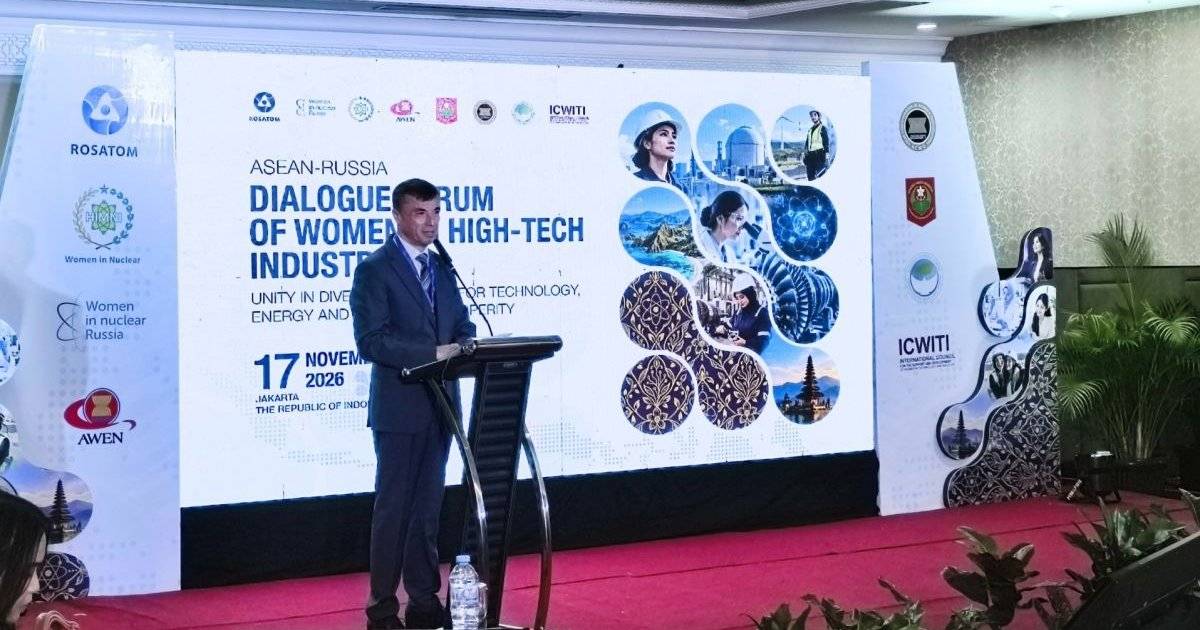
The commitment emerged during the ASEAN-Russia Dialogue Forum of Women in High-Tech Industries, held in Jakarta, Indonesia. The event brought together women representatives from Russia, Indonesia, the Philippines, Cambodia, Myanmar, Laos, Singapore, Vietnam, and Malaysia.
One of the forum's key outcomes was the identification of priority areas for joint cooperation, including nuclear technology, engineering education, digitalisation, and women's entrepreneurship. These priorities were formalised through several new cooperation agreements and the Jakarta Women in Technology Action Plan 2026.
The opening ceremony was attended by Sergey Tolchenov, Ambassador Extraordinary and Plenipotentiary of the Russian Federation to Indonesia; Stella Christie, Indonesia's Deputy Minister of Higher Education, Science, and Technology; Nita Yudi, Chair of AWEN Indonesia and the BRICS Women's Business Alliance in Indonesia; as well as representatives of leading Indonesian professional associations.
Particular attention was given to the role of women's professional organisations in expanding international partnerships and creating opportunities for women in technology-related sectors.
The keynote address was delivered by Yenny Wahid, Chair of the Indonesian Women's Congress (KOWANI) and Chair of the ASEAN Confederation of Women's Organizations (ACWO) for the 2027–2028 term.
"Unity in diversity is not only Indonesia's national motto but also an important principle of international cooperation. By bringing together the experiences and capabilities of women from our countries, we can create new opportunities for their professional development. I am confident that dialogue between women from Russia and ASEAN will lay the foundation for long-term partnerships for the benefit of future generations," Yenny said.
Developing Indonesia's Nuclear Workforce
One of the main topics discussed at the forum was the prospect of Russia-Indonesia cooperation in training national specialists for Indonesia's emerging nuclear industry.
Anna Belokoneva, Head of Rosatom State Corporation's Regional Office in Indonesia, highlighted the importance of developing a skilled domestic workforce to support the country's long-term nuclear energy ambitions.
"Indonesia's large-scale and ambitious nuclear energy development programme, with targets of 7 GW of installed capacity by 2040 and 35 GW by 2060, requires the development of a skilled national workforce for the country's future nuclear industry. Indonesian students, including many young women, are already studying through Rosatom's educational programmes. We also involve them in our initiatives and events, opening up opportunities for young people to pursue professional careers in the nuclear sector," Belokoneva said.
The discussion also explored opportunities to expand educational cooperation and encourage more young Indonesian women to pursue careers in science, technology, engineering, and mathematics (STEM), particularly in the nuclear energy sector.
Turning Dialogue into Concrete Cooperation
During thematic sessions, participants shared their countries' experiences in developing strategic industries, training STEM professionals, advancing digital transformation, and strengthening international technological partnerships.
Alexandra Ryabykh, co-organiser of the forum, Head of the Rosatom Women's Community, and member of the Council of the Eurasian Women's Forum, emphasised the importance of translating international dialogue into practical joint initiatives.
"Over the past several years, we have built a strong foundation for cooperation with our Indonesian partners. Today, this experience allows us to take our partnership to a new level and engage with women from other ASEAN countries. For us, it is important not only to exchange experiences but also to develop concrete joint projects," Ryabykh said.
She highlighted the Green Future International Women's Environmental Projects Competition as one example of an initiative developed across BRICS countries and partner nations.
According to Ryabykh, women from Southeast Asia have significant potential to participate in such initiatives.
"The next practical step is to implement the Jakarta Action Plan developed by the forum participants," she added.
Encouraging the Next Generation of Women in STEM
Another key component of the programme was the Career Lab session, titled "From STEM Education to Decision-Making in Industry".
The session focused on the importance of encouraging girls to explore STEM subjects from an early age and introducing them to career opportunities in engineering, science, and nuclear energy.
Prof. Geni Rina Sunaryo, Head of the Women's Empowerment Department of the Indonesian Nuclear Society (HIMNI), stressed the importance of providing young women with access to education, mentorship, and professional support.
"It is important to involve girls in STEM from an early age and introduce them to careers in engineering and science, including nuclear energy. Our shared responsibility is to provide them with access to knowledge, support, and mentorship so they can confidently choose their career paths," Sunaryo said.
She also highlighted educational initiatives organised through the International Council for Supporting and Developing Women in Industry and Technology, with support from the Rosatom Women's Community.
One such initiative is the "Girls in STEM" educational seminar, designed for female school students and university students.
New Agreements to Strengthen Women's Professional Networks
Another significant practical outcome of the forum was the signing of cooperation memorandums between the Rosatom Women's Community and professional and business associations from Indonesia and the Philippines.
The agreements cover the development of joint educational and mentoring programmes, support for women working in STEM fields, and the expansion of international professional networks.
Through these initiatives, the forum aims to establish a stronger foundation for collaboration among women professionals, researchers, entrepreneurs, and industry leaders across Russia and ASEAN.
The Jakarta Women in Technology Action Plan 2026 is expected to serve as a framework for translating the forum's discussions and commitments into concrete programmes and long-term partnerships.
By connecting education, technological innovation, professional development, and international cooperation, the initiative seeks to expand opportunities for women and strengthen their contribution to the development of strategic high-tech industries across the region.