For years, Minecraft builders have made sofas by pretending that stairs are seats and signs are armrests. Wilderness Bound has not made creativity unnecessary, but it has given builders a more natural-looking set of materials. Wool stairs, wool slabs and cushions make it easier to create softer, layered furniture without a furniture mod.
The trick is remembering that shape is not everything. A beautifully detailed couch can still ruin a survival house if it blocks the chest or covers the only path upstairs. Here are practical layouts for small cabins, city apartments and communal builds, along with a few mistakes worth catching before you place fifty cushions.
Highlights
- Wilderness Bound added wool stairs and slabs in all 16 wool colors.
- Three wool slabs of the same color can craft a cushion.
- Furniture layouts work best when movement paths stay clear.
- Decoration and normal gameplay function are different things; a seat-shaped block is not necessarily a new interactive chair.
Quick answer: Use wool stairs for the main shape of sofas and armchairs, wool slabs for low seating or layered surfaces, and cushions for accents. Choose two or three colors, leave space to walk, and test arrangements in a small room before furnishing an entire house.
Table of Contents
- What changed in Wilderness Bound?
- Make a two-seat sofa that does not swallow the room
- Build a reading corner with three pieces
- Create a café booth or dining nook
- Turn a large living room into separate zones
- Outdoor camp seating without the clutter
- Fix the five common design mistakes
- Frequently Asked Questions
- Final Thoughts
What changed in Wilderness Bound?
Mojang's September 2026 update added wool stairs and slabs in the 16 established wool colors. It also introduced cushions, which can be found in abandoned camps or crafted from three wool slabs of the same color. That gives builders a small family of compatible pieces rather than a single decorative block.
It helps to think in layers. A full wool block is the largest shape, a stair is a more recognizable seat or angled trim, a slab creates a lower profile, and a cushion adds a finishing touch. Different pieces can change the visual weight of a room, even when you do not use any resource packs or shaders.
Do not assume that something which looks like furniture necessarily has all the interactions of real furniture. These pieces are primarily building and decorative materials. Confirm specific collision and sitting behavior in your edition rather than calling a cushion a guaranteed seat mechanic.
Make a two-seat sofa that does not swallow the room
Pick one wool color for the base and a contrasting cushion color. Build a short two-block-wide seating shape with stairs facing the room, then extend the profile only if there is enough floor space. A low side detail can be made with slabs, nearby full blocks or an intentionally simple armrest. The aim is not pixel-perfect realism; it is a readable silhouette.
Place the sofa against a wall when the room is small. Leave an obvious gap in front for movement and make sure the door can open visually into a clear area. If you put a chest behind the couch just because the space looks empty, accessing it may become unnecessarily awkward. Function takes priority in a working Survival base.
Try one sample cushion before covering the whole sofa. A small contrast is usually more convincing than a chaotic mix of five saturated colors. If your room has warm poplar wood walls, neutral or muted wool shades can keep the color balance under control.
Build a reading corner with three pieces
A reading corner needs very little. Use one stair-shaped chair, a low slab surface and a nearby lamp or other safe light source. Put a bookshelf behind or beside the chair if you have one. You have immediately made an empty corner feel purposeful without spending the next hour gathering rare decoration.
If the corner sits beside a window, orient the chair toward the view. Avoid placing tall blocks directly in front of the glass. You can also use a cushion as a visual floor accent or as a color match for a rug. The goal is a room that tells you what someone might do there, even though the game does not add a scripted reading animation.
This arrangement works particularly well in bedrooms and cabins where two walls meet. Keep floor space around a workbench or furnace clear so the decoration does not interfere with routines.
Create a café booth or dining nook
For a café, repeat the same two-seat pattern along a wall and put a modest table in front. The repeated shapes provide rhythm. Use a consistent color scheme for several booths, then vary only one element such as the cushions or table centerpiece. An entire restaurant full of different color combinations looks like a furniture showroom rather than a café.
A family dining nook can be smaller: two opposing bench-like shapes and a one-block-wide table. Check that players can move from the entrance to the seating area without climbing over blocks. You can use wool slabs as a gentle visual transition between full-height seating forms and surrounding floors, though the final look depends on nearby block heights and your chosen orientation.
In Survival, prioritize the kitchen's useful blocks before the seating. A café-style build can still store food and equipment. Organize the room so that the cooking area and dining area feel connected but do not trap the player between decorative objects.
Turn a large living room into separate zones
Large rooms often look empty because their builders place furniture around the outside wall and leave a huge vacant middle. Instead, divide the room into activity zones: conversation, maps, storage and an entrance path. A pair of opposing sofas can define a conversation area. A small rug or contrasting floor pattern connects them visually.
Wool stairs and slabs are useful because they give these zones different heights without installing a mod. Keep a wide route between key destinations. In shared worlds, remember that multiple players may be moving and opening storage at the same time. Furniture must tolerate traffic, not just screenshot angles.
One easy improvement is to vary vertical emphasis. Put a low sofa near a taller bookshelf wall, then keep the center table visually simple. If every surface is full of decorations, viewers cannot tell which detail matters.
Outdoor camp seating without the clutter
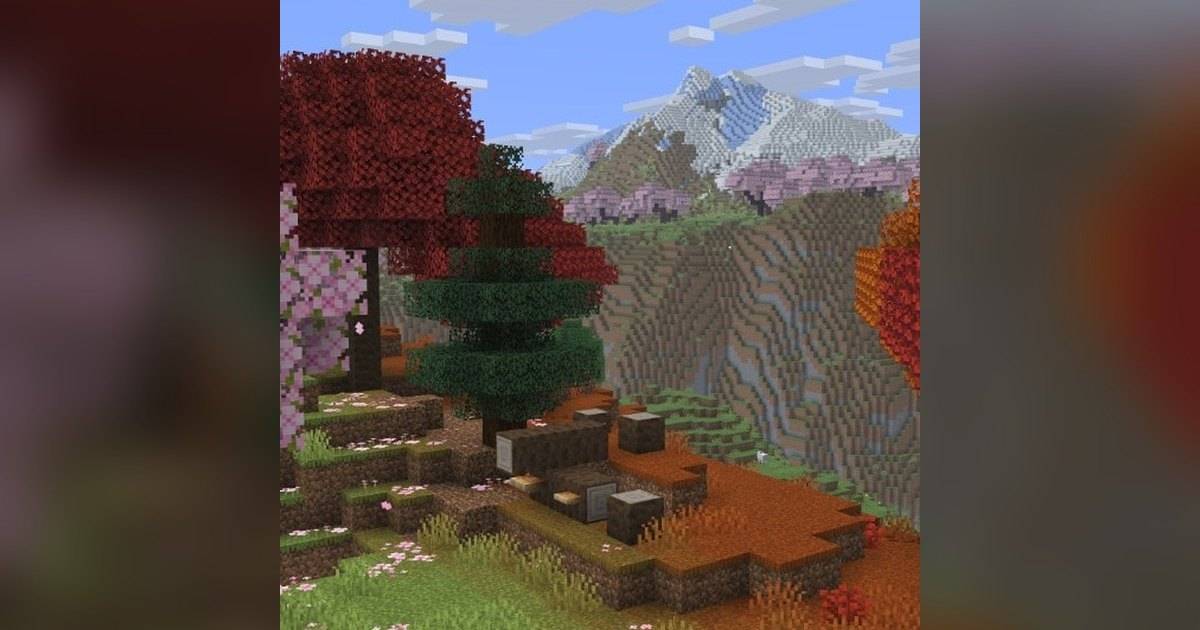
Cushions and low wool pieces suit the dappled forest's camping theme. Arrange a small group around a campfire area, leaving a sensible separation from the fire and enough room for friends to move. Use a restrained palette that fits the forest rather than forcing neon colors into an autumn campsite.
Make the camp functional as well as atmospheric. Add a storage chest and appropriate light near a path. If you use a straw bed for the campsite, remember the official mechanics: it is consumable and does not set spawn. A permanent respawn point should rely on a regular bed and whatever other precautions your world requires.
For a repeatable design, create one seating arrangement and copy its proportions, not necessarily every single block. Small variations in trees and terrain are what make an outdoor area feel natural.
Fix the five common design mistakes
First, the sofa is too large for the room. Second, the colors clash with the walls. Third, every cushion gets placed in a neat straight line, making the room feel like a storage display. Fourth, a chair hides a chest or crafting table. Finally, builders confuse decorative shape with a guaranteed animation or seat interaction.
The cure is simple: step back, walk the route from door to storage, and look at the room from the angle a player will actually see. Remove a third of the decoration if the result feels crowded. You can always add detail later, but reclaiming a blocked room is more annoying than it sounds.
Frequently Asked Questions
How do you craft a Minecraft cushion?
The official Wilderness Bound overview lists three wool slabs of the same color as the cushion recipe.
Do wool stairs come in every color?
The update added wool stairs and slabs for all 16 wool colors.
Can I sit on a cushion as if it were a chair?
Do not assume new decorative blocks provide a full seated-player interaction. Check your version's current mechanics.
Are wool furniture builds available in Java and Bedrock?
Wilderness Bound was released as a game drop for both editions. Build appearance should transfer broadly, although controls and exact interactions can differ.
Can cushions replace my bed?
No. A decorative cushion does not serve the same role as a standard bed for sleeping and respawn management.
Final Thoughts
The best thing about the new wool pieces is not that you can build a sofa. Minecraft players were already doing that. It is that you now have more control over scale, layers and color without adding a complex mod. Start with the furniture your home genuinely needs, and let the new blocks make it look better rather than busier.
Sources and version notes
Official references used to verify gameplay facts. Player-created build plans and troubleshooting checklists are editorial recommendations, not developer-prescribed missions.