INDUSTRY.co.id - Da Nang - President Joko Widodo discussed the maritime economy in APEC Business Advisory Council (ABAC) 2017 meeting.
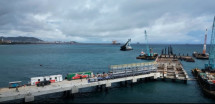
"The President of APEC's two-thirds is water, similar to Indonesia but why talks about trade and investment focus mostly on land? It says that maritime economy or 'blue economy' is very important," said the chairman ABAC representing Indonesia Anindya Bakrie in Da Nang, Vietnam,
The President attended the 25th Asia-Pacific Economic Cooperation Summit (APEC) summit in Da Nang, Vietnam on November 10-11. The first agenda of the President is to attend ABAC with the leaders of APEC members.
"Not just for connectivity, reducing shipping costs and more but it can also make the aqua culture grow, these things are very appreciated," Anindya added to the media crew.
According to Anindya who is the Vice Chairman of the Indonesian Chamber of Commerce in Organization, Membership, Regional Empowerment and Corporate Governance, the President also highlighted the problem of inequality.
"Mr. President voiced something very interesting, because so far people always talk about 'trade and investment' which is always up from 25 years ago but the issue of inequality, gap, it turns out there everywhere not just developing countries, the state go forward too, "Anindya added.
He insisted that President Jokowi underlined that anything done in APEC after 2020 should highlight the gap and what needs to be done to tackle it.
"It takes an equilibrium that can harmonize between 'growth and equity', the Indonesian language of equitable growth.This is what we push," Anindya said.
There are 21 APEC member leaders present, including US President Donald Trump, Chinese President Xi Jinping, Prime Minister Justin Trudeau, Philippine President Rodrigo Duterte, Japanese Prime Minister Shinzo Abe, New Zealand Prime Minister Jacinda Ardern, Mexican President Enrique Pea Nieto.
The 2016 APEC theme is "Creating New Dynamics, Building a Common Future" will focus on several issues, including sustainable economy, regional integration, strengthening the competitiveness of small and medium-sized micro enterprises, climate change agricultural funds.
APEC established in 1989, this year entered the final phase of "Bogor Goals" on trade and investment liberalization in 2020, there are obstacles that arise in the process of globalization and economic integration.
There are 21 economic entities that are members of APEC namely Australia, Brunei Darussalam, Canada, Chile, China, Hong Kong, Indonesia, Japan, South Korea, Malaysia, Mexico, New Zealand, Papua New Guinea, Peru, Philippines, Russia, Singapore, Taipei, Thailand, USA and Vietnam.
APEC members represent 39 percent of the world's population, accounting for 57 percent of GDP and 49 percent of global trade.
President Jokowi Discusses Maritime Economy at the APEC Summit
President Joko Widodo discussed the maritime economy in APEC Business Advisory Council (ABAC) 2017 meeting.
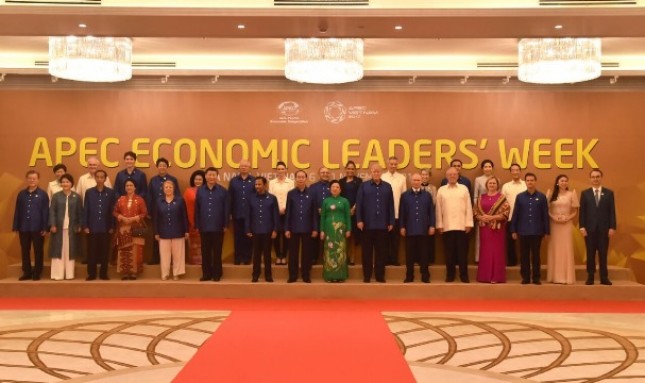
President Jokowi Attends APEC Summit in Vietnam (Photo Setkab)
Tags: